Rabbit Launches OS3, a Cloud-Based AI Agent That Bridges Multiple Devices
Rabbit Inc. has introduced OS3, a personal AI agent operating from the cloud that integrates with users' computers and other devices through a lightweight agent installation.
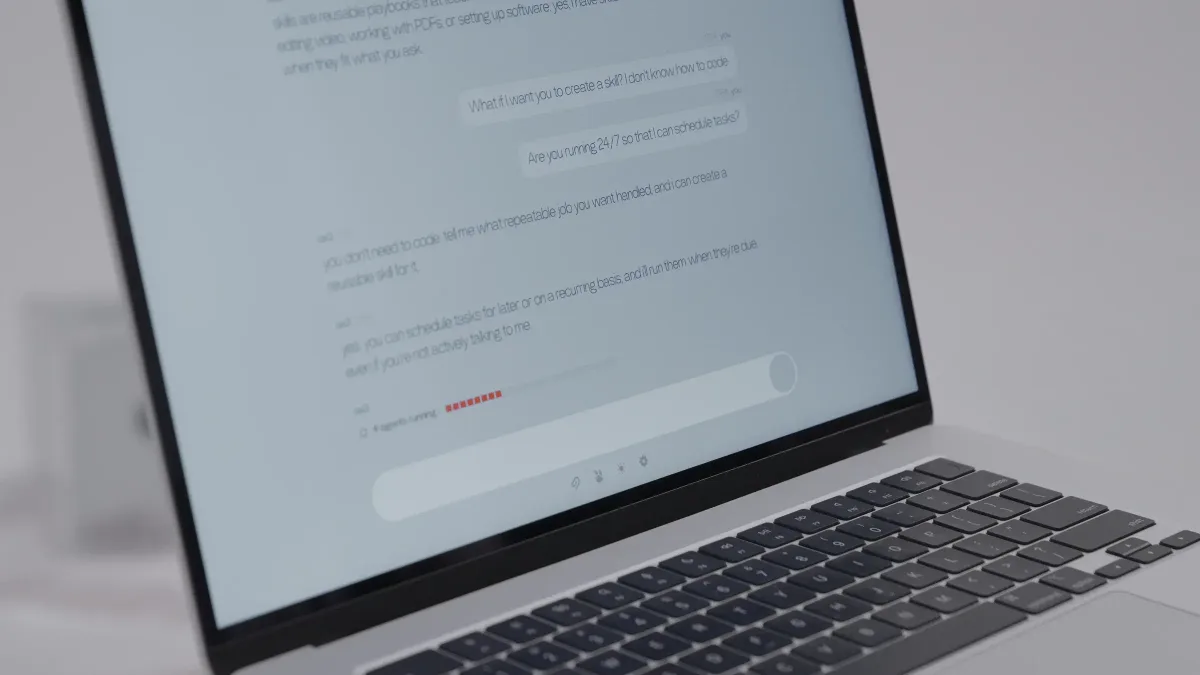
Rabbit Inc., the artificial intelligence startup behind the pocket-sized R1 AI device, announced OS3 on Tuesday—a cloud-hosted personal AI agent designed to connect with and operate across a user's computers and other connected devices.
The system deploys through the Rabbit agent, which installs via a single command and can run on as many as five machines simultaneously. Despite residing in the cloud, OS3 reaches users' PCs and other hardware through this lightweight agent interface.
The personal AI agent space has grown crowded, with competitors including OpenClaw, Hermes Agent, Instinct and Muse all offering autonomous capabilities that operate on consumer hardware, maintain long-term objectives and leverage digital tools like email, calendars and file management to perform background tasks.
Model Flexibility and Cost Control
OS3 works with any AI model, but operates on a bring-your-own-key model, requiring users to supply their own subscriptions. Users must either register with a model provider such as Anthropic PBC's Claude or OpenAI Group PBC's GPT, or deploy their own local model. The agent also integrates with aggregators like OpenRouter.
A key capability allows the agent to switch between models without losing context, memory or learned skills, enabling users to optimize spending based on task complexity.
Autonomous Operation and User Control
"We've spent two and a half years building toward a system you don't operate, but instead just tell it the outcome," said Chief Executive and founder Jesse Lyu. "OS3 allows users to stop worrying about whether a task is technically possible, and start collaborating on whatever is on their mind (whether a wild idea or a concrete problem)."
Users interact with the agent through a chat interface or voice commands. The system maintains continuous availability with background processing capabilities and alerts users when long-running tasks finish. Communication extends to users' phones via a paired Telegram bot and through the web interface.
Rabbit emphasized that OS3 includes safety mechanisms and only executes actions in response to explicit user direction. Sensitive operations demand user approval and confirmation, while system-level permissions are requested locally by the operating system. Users retain the ability to revoke permissions at any time.
https://www.youtube.com/embed/erZ-M5NM4A8?feature=oembed
Skill Portability and Compatibility
OS3 supports universal skill compatibility, allowing users to transfer skills from other agents or AI assistants. Users can paste a skill's URL and the system configures it automatically without requiring command-line input or manual setup.
Platform Support and Availability
The agent currently runs on Windows, macOS and Linux machines, as well as cloud virtual machines, dedicated AI machines and the R1 device. Additional platform support is in development. The R1 is not a prerequisite for running OS3, though the two work together.
A Rabbit account is required to begin using OS3, and interested users can register through the company's website.
Broader Industry Trends
Major frontier AI labs including Anthropic and OpenAI are similarly exploring always-on personal agent capabilities with computer-use functionality. Anthropic's Claude Dispatch, for instance, enables the company's Windows and macOS applications to run agents on a user's PC that operate even when the user is away, accessible through mobile devices and capable of accessing local files.
Read more

Identity governance faces new test as AI agents proliferate across enterprises
Autonomous AI agents are forcing organizations to rethink how they manage access and permissions at machine speed. SailPoint's Navigate conference will explore how identity security must evolve to handle this expanding population of non-human actors.

Vertical AI and Purpose-Built Hardware Drive Next Wave of Technology Growth
Specialized AI systems tailored to specific industries are emerging as the primary engine for the next phase of technology expansion, according to insights from the Bank of America Private Tech Trailblazers Conference 2026.
CrowdStrike and CoreWeave Partner to Automate AI Security at Machine Speed
As cyberattackers breach systems in seconds, CrowdStrike and CoreWeave are embedding automated defenses throughout AI infrastructure, turning attacks into training data for faster response.