Qualcomm Secures Major Amazon Deal for Custom AI Chips and Optical Networking
Qualcomm has landed a significant contract to provide Amazon with specialized artificial intelligence processors and optical networking equipment, backed by a $4 billion stock warrant arrangement.
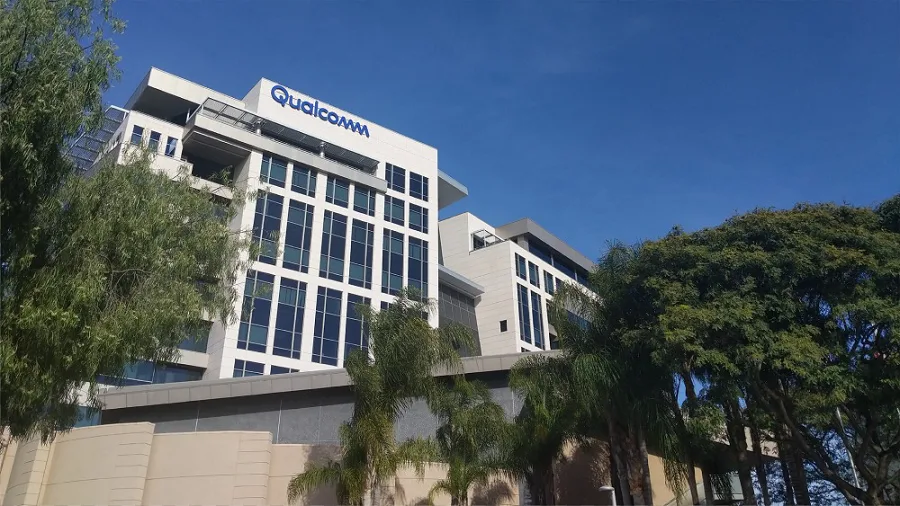
Qualcomm Inc. has secured a major agreement with Amazon.com Inc. to deliver custom artificial intelligence chips alongside networking hardware. The partnership encompasses broader collaboration across multiple technology domains. As part of the arrangement, Qualcomm issued a stock warrant granting Amazon the ability to purchase up to 25 million shares valued at $4 billion, with vesting scheduled across tranches extending to 2036. A regulatory filing indicates that certain share issuances depend on Amazon's purchase of up to $60 billion in Qualcomm products.
"By working together on customized silicon and advanced connectivity, we're delivering more performant, efficient, and cost-effective infrastructure for our customers," stated Prasad Kalyanaraman, Vice President of Amazon Web Services.
The two organizations will jointly develop "customized silicon at scale for large-scale AI data centers." Qualcomm characterizes this effort as "multi-generational," signaling its intention to supply Amazon with successive chip generations. Both parties confirmed that the processors will be engineered for inference operations.
This announcement follows Qualcomm's earlier multi-generational AI chip agreement announced three months prior with Meta Platforms Inc. Meta has committed to acquiring multiple future versions of the Dragonfly C1000, a central processing unit line built for AI server applications. The most cutting-edge variants in this lineup will incorporate more than 250 cores operating at frequencies exceeding five gigahertz.
Optical Networking Infrastructure
A second pillar of the Qualcomm-Amazon partnership centers on optical network equipment designed to interconnect servers within AI clusters. Qualcomm will furnish Amazon with SerDes and DSP technologies for this purpose.
Within server systems, information exists as electrical signals. A digital signal processor, or DSP, converts these electrical signals into light suitable for transmission through fiber-optic cables while managing associated processing functions.
Inside a server processor, data-carrying electrical signals travel as multiple concurrent parallel streams. Qualcomm's DSP technology includes a SerDes component that merges these separate streams into a unified stream. This consolidation simplifies data transmission from a server CPU to external systems. The SerDes module simultaneously reduces the energy consumption needed for data movement.
Qualcomm's leading optical DSP product is the CO400. This device can send data across distances reaching 12 miles, making it appropriate for interconnecting separate data centers. The CO400 incorporates forward error correction technology to minimize transmission failures. This mechanism enriches data streams with supplementary information that permits the receiving end to restore degraded optical signals.
Optical networking represents a critical component of Amazon's data center infrastructure roadmap. In June, the company entered into an agreement to procure billions of dollars in equipment from Corning Inc., a major fiber-optic cable supplier. Earlier that year, Amazon unveiled an internally created network architecture called RNG. This design employs fiber-optic cables arranged in a semi-random pattern to enhance traffic flow efficiency.
Accelerating Development Through AWS
Qualcomm intends to increase its reliance on AWS services as part of this partnership. The company will leverage Amazon Bedrock, a managed artificial intelligence platform, to execute electronic design automation software. These tools assist engineers in developing and validating chip designs. Qualcomm anticipates this approach will accelerate its product development timeline.
Read more

Identity governance faces new test as AI agents proliferate across enterprises
Autonomous AI agents are forcing organizations to rethink how they manage access and permissions at machine speed. SailPoint's Navigate conference will explore how identity security must evolve to handle this expanding population of non-human actors.

Vertical AI and Purpose-Built Hardware Drive Next Wave of Technology Growth
Specialized AI systems tailored to specific industries are emerging as the primary engine for the next phase of technology expansion, according to insights from the Bank of America Private Tech Trailblazers Conference 2026.

CrowdStrike and CoreWeave Partner to Automate AI Security at Machine Speed
As cyberattackers breach systems in seconds, CrowdStrike and CoreWeave are embedding automated defenses throughout AI infrastructure, turning attacks into training data for faster response.