OpenAI's Mac Mini Buying Spree Signals Shift in AI Infrastructure Demands
OpenAI has acquired tens of thousands of Mac mini and Mac Studio units for reinforcement learning and computer-use agent training, revealing how AI workloads are evolving beyond text generation toward systems that interact with software interfaces.
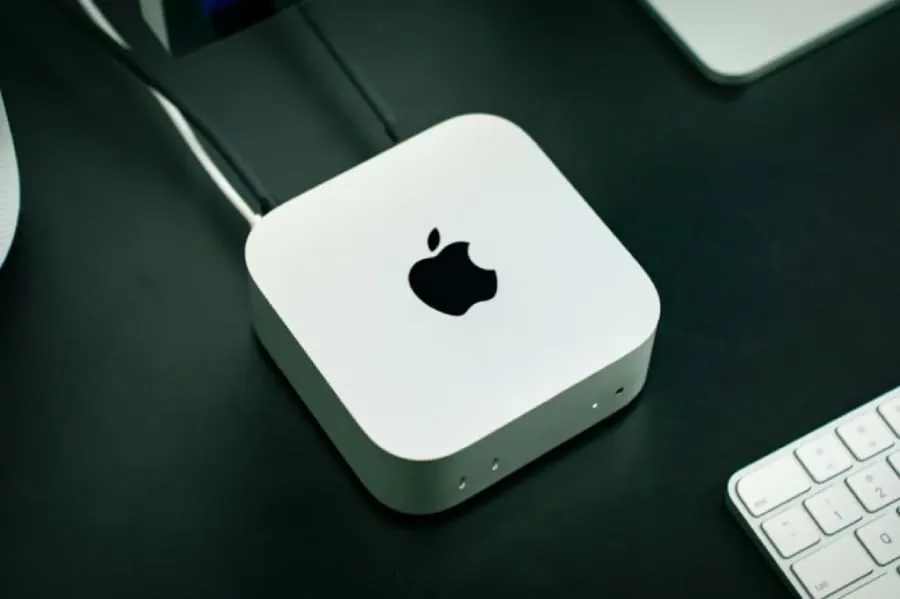
Apple's compact desktop computers, traditionally favored by creative professionals and software developers, are now serving as critical infrastructure for some of the world's most sophisticated artificial intelligence operations.
According to reporting by The Information, OpenAI has acquired tens of thousands of Mac mini and Mac Studio units over the past several months. These machines support reinforcement learning initiatives and the development of computer-use agents—systems designed to interact with applications the way humans do. OpenAI's procurement strategy emphasizes headless configurations without displays or keyboards, enabling the machines to function as integrated components within its broader computing infrastructure.
Computer-use agents operate by navigating user interfaces, writing and testing code, managing email systems, and executing complex workflows involving multiple sequential steps. Reinforcement learning enables these agents to refine their capabilities through iterative cycles of action, evaluation, and correction.
Anthropic is pursuing comparable strategies, though it has opted to lease Mac mini capacity through Amazon Web Services rather than purchasing hardware directly. The Information did not specify the volume of machines Anthropic is utilizing or the particular applications driving that demand.
Apple's memory advantage
The attraction of Apple's computing platform stems fundamentally from its unified memory design. In contrast to traditional architectures that maintain separate memory pools for processors and graphics accelerators, Apple's silicon enables both components to draw from a single shared memory resource.
This architectural approach proves particularly valuable for workloads requiring frequent data transfers between AI systems and operating system functions. The Mac mini and Mac Studio incorporate active thermal management systems, positioning them as superior alternatives to portable computers for extended computational tasks.
This development does not represent a displacement of Nvidia's extensive GPU infrastructure. Training large-scale foundation models remains a computationally demanding challenge requiring specialized hardware. Rather, Apple's machines appear to address a specific niche where memory availability, operating system integration, and support for isolated computing environments deliver particular advantages.
A supply problem for Apple
The apparent surge in Mac acquisitions arrives as Apple confronts challenges meeting demand for higher-capacity memory configurations across its Mac lineup.
Apple's Mac segment generated approximately $10.4 billion in revenue during its most recent quarter, representing a 29% increase compared to the prior year, according to data cited by MLQ.ai. This expansion demonstrates the intensity of current Mac demand, though Apple has not publicly linked this growth to purchases by OpenAI or comparable AI research organizations.
The Information indicated that unexpectedly robust corporate purchasing activity motivated Apple to introduce refreshed Mac mini and Mac Studio variants ahead of its customary autumn product cycle. The updated systems emphasize capabilities for executing AI models on individual machines and coordinating multiple connected systems.
Why it matters: Apple finds itself in an unexpected race
The most consequential aspect may extend beyond OpenAI's Mac procurement to what these transactions illuminate regarding the transformation of AI infrastructure architecture.
As AI agents transition from text generation toward direct computer operation, organizations require platforms where agents can continuously observe displays, engage with software, and learn from operational failures. This generates market demand for systems engineered for extended, memory-intensive operations rather than peak computational throughput alone.
Nvidia reportedly considers Apple a formidable competitor in localized AI applications, while its DGX Spark product targets engineers wanting compact systems integrated with Nvidia's software platform. According to a Taiwan Economic Daily report referenced by WCCFTech, ASUS and MSI have already depleted their initial RTX Spark inventory allocations and are requesting additional units.
Apple confronts a substantial opportunity alongside a significant constraint: the organization appears to have inadvertently entered the enterprise AI sector without establishing the operational infrastructure or comprehensive enterprise approach required to maximize this emerging market.
This creates a paradoxical dynamic. AI research organizations are deploying Macs as computational infrastructure, whereas Apple continues positioning them primarily as consumer and professional desktop systems. Should agentic AI systems sustain demand for large-scale machine deployments, Apple's capacity to manufacture, service, and expand production for this unanticipated sector could prove as strategically important as the processors powering these devices.
Read more

Identity governance faces new test as AI agents proliferate across enterprises
Autonomous AI agents are forcing organizations to rethink how they manage access and permissions at machine speed. SailPoint's Navigate conference will explore how identity security must evolve to handle this expanding population of non-human actors.

Vertical AI and Purpose-Built Hardware Drive Next Wave of Technology Growth
Specialized AI systems tailored to specific industries are emerging as the primary engine for the next phase of technology expansion, according to insights from the Bank of America Private Tech Trailblazers Conference 2026.

CrowdStrike and CoreWeave Partner to Automate AI Security at Machine Speed
As cyberattackers breach systems in seconds, CrowdStrike and CoreWeave are embedding automated defenses throughout AI infrastructure, turning attacks into training data for faster response.