OpenAI Secures Malaysian AI Compute Through Firmus Partnership as Asia-Pacific Infrastructure Race Heats Up
OpenAI has committed to purchasing future computing capacity at two Malaysian data centers operated by Firmus, marking another strategic expansion in the region's intensifying competition for AI infrastructure.
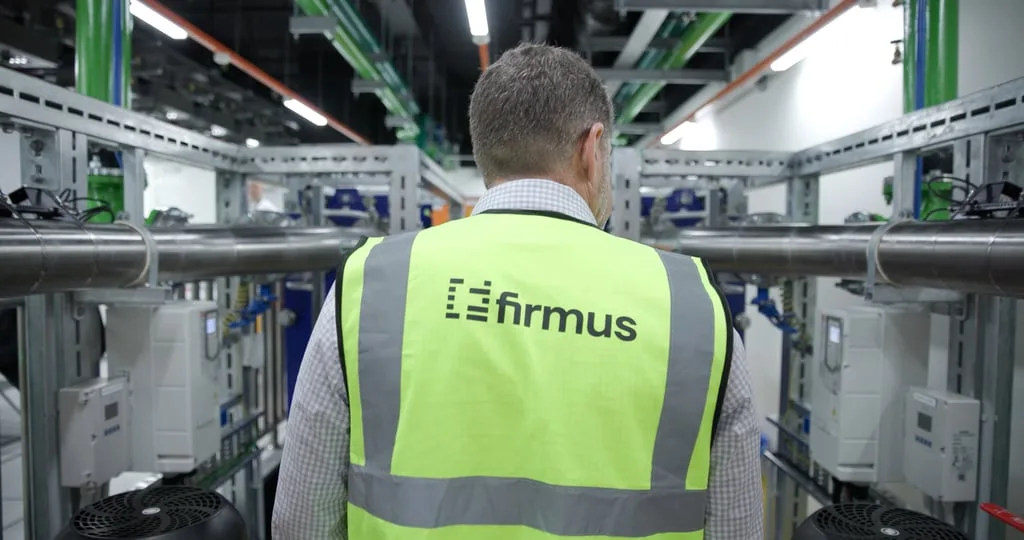
OpenAI is locking in access to artificial intelligence computing resources in Malaysia at facilities that have not yet launched, positioning itself within Asia-Pacific's rapidly expanding infrastructure ecosystem. On September 8, Firmus announced that OpenAI would serve as an anchor tenant at two Malaysian AI Factory locations through a long-term agreement guaranteeing dedicated computing power. This partnership pushes Firmus's overall contracted capacity across its entire customer portfolio beyond 900 megawatts.
The specifics of OpenAI's reservation—including the number of megawatts allocated, financial terms, precise geographic locations, and when services will commence—have not been made public. This opacity makes it difficult to assess the magnitude and timeline of Malaysia's new AI computing availability, particularly as regional demand for such infrastructure continues climbing.
What the Firmus deal actually secures
According to Sachin Katti, OpenAI's Vice President of Compute Strategy, the Malaysian installations will address expanding computational needs throughout Asia-Pacific and beyond. Firmus operates two AI factories currently—one in Australia and one in Singapore—with five additional facilities in various stages of development.
Firmus has not revealed the megawatt allocation designated for OpenAI or identified where in Malaysia the two facilities will be situated. Reuters reported that Firmus declined to disclose the transaction's financial value; the 900 MW figure represents contracted capacity from Firmus's entire customer base rather than OpenAI's portion alone.
Firmus intends to roll out Nvidia Vera Rubin systems throughout its Asia-Pacific footprint. The Malaysian locations will leverage Nvidia's DSX AI Factory Platform, combining Vera Rubin NVL72 rack-scale systems with Firmus's proprietary HyperCube architecture, which integrates liquid cooling technology, mechanical infrastructure, and power distribution.
Malaysia represents one component of Firmus's broader Southeast Asian strategy. The company is constructing a 360 MW Nvidia-powered facility in Indonesia with an expected launch in 2027, while maintaining a portfolio of seven AI factories distributed across Australia, Singapore, Indonesia, and Malaysia.
Malaysia's AI infrastructure squeeze
Malaysia is experiencing substantial capital inflows for digital infrastructure projects. According to the Malaysian Investment Development Authority, data center and cloud infrastructure initiatives received RM95.8 billion—approximately $23.6 billion—in approved investment during the first half of 2026, representing nearly 44% of the nation's total approved investment during that timeframe.
The rapid expansion is creating bottlenecks in electricity, water resources, cooling capacity, and network connectivity. The Johor region alone has 8,542 MW of data center projects in its pipeline, yet colocation facilities maintain a vacancy rate of just 0.7%, revealing a substantial mismatch between announced capacity and what businesses can actually access.
Malaysia's Data Centre Task Force now requires developers to obtain project approval only after demonstrating assured access to electrical power and water resources alongside environmental compliance measures. Singapore continues to dominate regional venture capital for data center investments, even as physical infrastructure capacity increasingly shifts to neighboring territories including Malaysia and Indonesia.
Firmus has not announced a timeline for either Malaysian location to begin processing OpenAI workloads. The September 8 agreement reserves future capacity rather than providing access to infrastructure ready for immediate use.
OpenAI's commitment introduces another heavyweight participant to Malaysia's growing AI infrastructure landscape. Future developments will likely center on OpenAI's specific megawatt requirements, the Malaysian sites' geographic locations and operational launch dates, and whether the additional capacity ultimately influences OpenAI service availability throughout the region.
Read more

Identity governance faces new test as AI agents proliferate across enterprises
Autonomous AI agents are forcing organizations to rethink how they manage access and permissions at machine speed. SailPoint's Navigate conference will explore how identity security must evolve to handle this expanding population of non-human actors.

Vertical AI and Purpose-Built Hardware Drive Next Wave of Technology Growth
Specialized AI systems tailored to specific industries are emerging as the primary engine for the next phase of technology expansion, according to insights from the Bank of America Private Tech Trailblazers Conference 2026.

CrowdStrike and CoreWeave Partner to Automate AI Security at Machine Speed
As cyberattackers breach systems in seconds, CrowdStrike and CoreWeave are embedding automated defenses throughout AI infrastructure, turning attacks into training data for faster response.