Open-source AI models push enterprises toward private infrastructure as storage becomes critical
With open-weight models narrowing the gap to proprietary systems, companies are deploying generative AI on their own hardware—making corporate data storage the linchpin of private AI deployments.
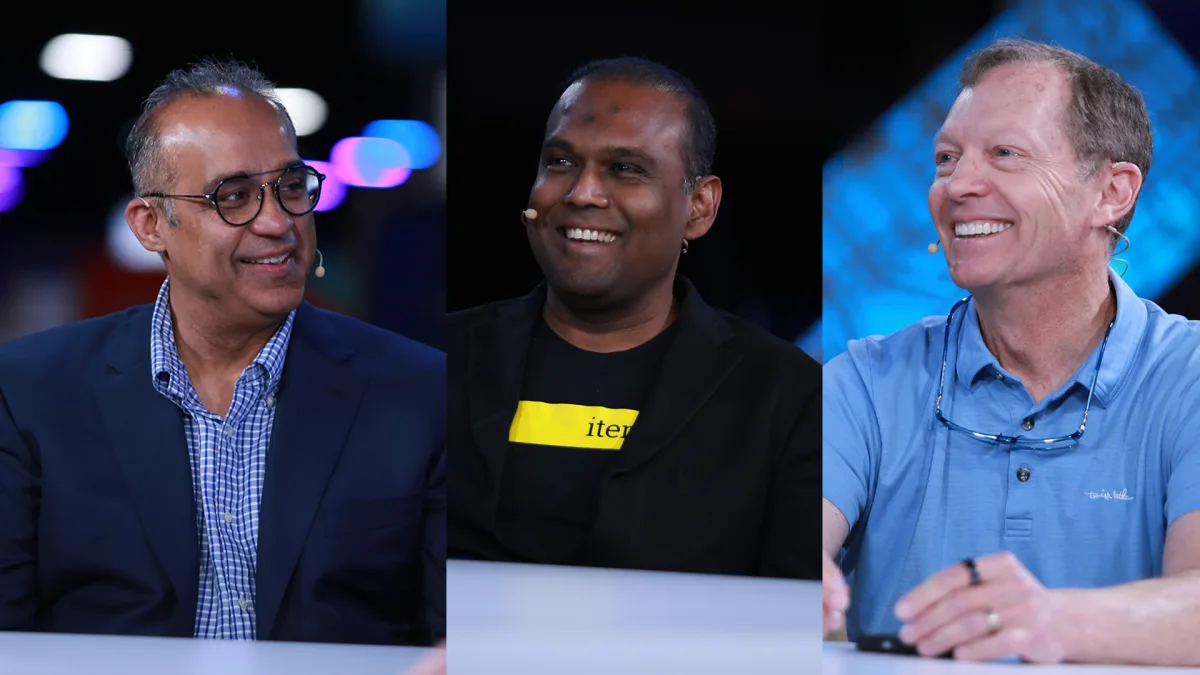
Open-weight models are closing the performance gap with proprietary frontier systems, giving enterprises a viable path to run generative AI on infrastructure they control. This shift places the data already housed in corporate storage systems front and center in discussions about private AI implementation.
Organizations are transitioning AI from experimental phases into production environments powered by intelligent data infrastructure. The preceding two years focused heavily on preparing large, complex data environments for AI readiness, which is now driving productivity improvements across sectors, according to Ashish Dhawan, senior vice president, general manager and chief revenue officer of the Cloud Business Unit at NetApp Inc.
There's been more maturity about the usage of models in private AI. You find that whether it's closed models or open-weight models, they're getting close to the frontier. That's where our AIPod Mini with Iterate can really work well.
Ashish Dhawan, NetApp
Open-weight models bring private AI closer to enterprise data
NetApp and Iterate.ai have partnered to deliver the AIPod Mini, a ready-to-deploy system combining NetApp's infrastructure with Iterate.ai's Generate platform. The arrangement ensures that models, hardware and data remain within the customer's environment rather than being transmitted to external services, according to Brian Sathianathan, co-founder and chief technology officer of Iterate.ai.
AIPod Mini has attached connections to the NetApp storage, and it talks to NetApp using the ONTAP protocol that's time-tested. Then on top of it, on top of the AIPod Mini, we are running our Generate software. That software has an LLM embedded in it, so you can run all your AI queries locally and fully privately within your four walls.
Brian Sathianathan, Iterate.ai
The appliance arrives with over 200 agent templates, more than 200 skills and connectivity to more than 800 tools, according to Jon Nordmark, co-founder and chief executive officer of Iterate.ai. In one insurance use case, accident-report analysis that typically requires eight hours of analyst time was completed in eight minutes. Iterate.ai positions its methodology as outcome-based AI, emphasizing business results over technical metrics.
What we mean by that is it's got to produce the proper KPIs and business outcomes. Now, the technical things are kind of table stakes, but everything else is what really matters to the enterprise.
Jon Nordmark, Iterate.ai
Healthcare demonstrates the approach's potential more vividly. Hospitals typically collect between 80% and 85% of amounts billed to insurers. Iterate.ai's forensic revenue cycle agent uncovered $17.4 million in denied claims for a hospital generating $150 million in annual billing, according to Sathianathan. The system chains three agents together: one reads payer contracts, another examines incoming denials and a third drafts resubmissions, Nordmark explained. As autonomous agents handle sensitive back-end operations, controlling their access becomes essential.
If these autonomous agents are beginning to run, what it also means is you want to have governance. You want to have permission. That's where the NetApp platform is really powerful.
Brian Sathianathan, Iterate.ai
NetApp unveiled Novus at the event, a storage architecture designed to handle zettabyte-scale capacity in AI factories. For both partners, the broader implication is that effective open-weight models require access to the institutional knowledge embedded in enterprise storage systems.
https://www.youtube.com/embed/0UcGEEOY8PE?feature=oembed
Memory plus context equals knowledge. We talk a lot about that. Memory is what makes AI work. So much of a company's memory is in storage today, and that's what NetApp's here to unleash.
Jon Nordmark, Iterate.ai
Read more
Identity governance faces new test as AI agents proliferate across enterprises
Autonomous AI agents are forcing organizations to rethink how they manage access and permissions at machine speed. SailPoint's Navigate conference will explore how identity security must evolve to handle this expanding population of non-human actors.

Vertical AI and Purpose-Built Hardware Drive Next Wave of Technology Growth
Specialized AI systems tailored to specific industries are emerging as the primary engine for the next phase of technology expansion, according to insights from the Bank of America Private Tech Trailblazers Conference 2026.

CrowdStrike and CoreWeave Partner to Automate AI Security at Machine Speed
As cyberattackers breach systems in seconds, CrowdStrike and CoreWeave are embedding automated defenses throughout AI infrastructure, turning attacks into training data for faster response.