Microsoft Weaves AI Infrastructure Together at Ignite, Betting on Unified Cloud-Chip-Model Stack
At its annual Ignite conference, Microsoft unveiled a series of updates designed to position Azure as a comprehensive platform for multi-agent AI workloads, tightening the integration between its cloud services, custom silicon and enterprise AI tools.
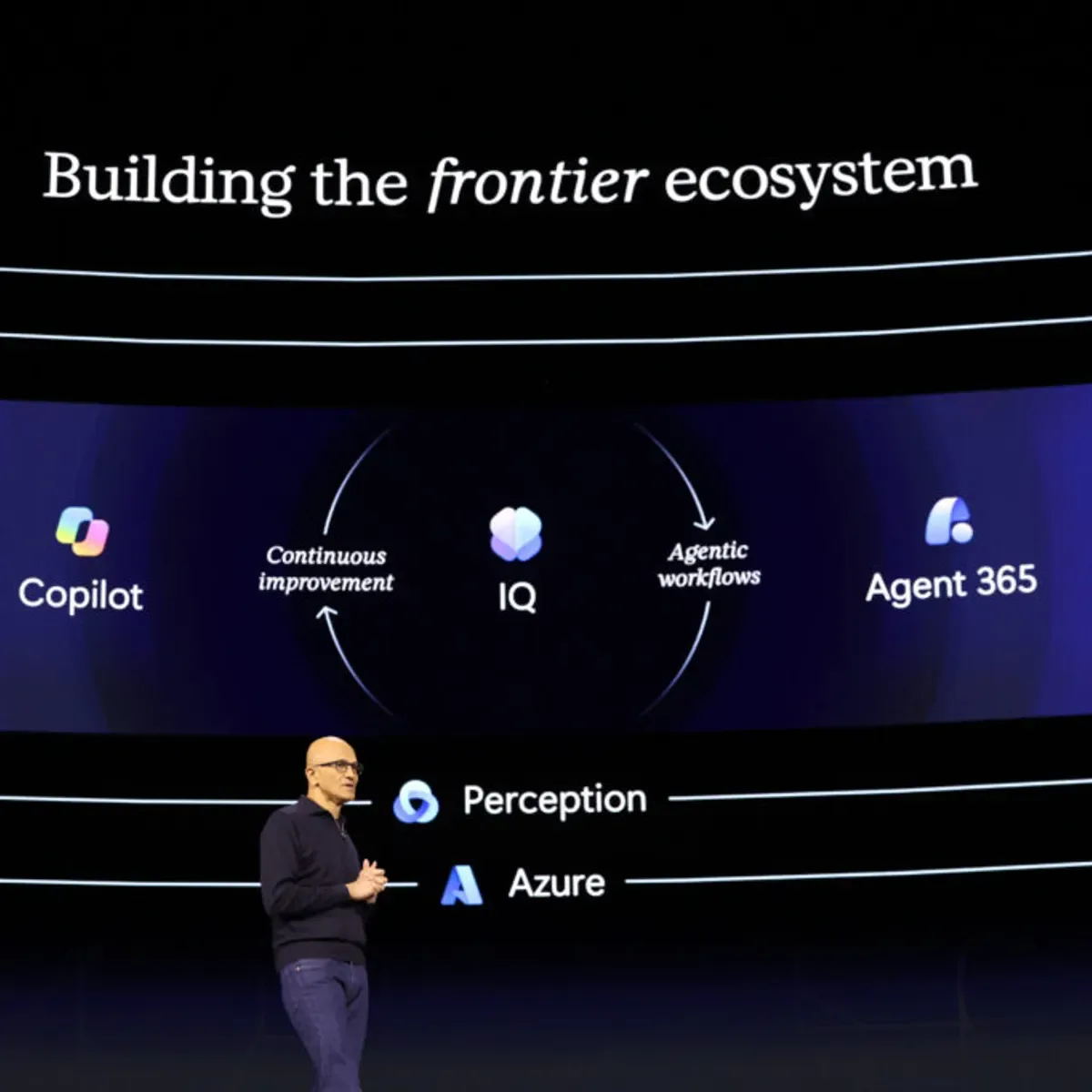
Microsoft is preparing Azure for the era of multi-agent systems. The company used its flagship Ignite conference to demonstrate how it intends to bind together cloud infrastructure, proprietary chips and AI models into a cohesive offering. Azure sits at the center of this strategy, serving as the foundation for both advanced AI capabilities and the modernization of legacy enterprise systems.
The announcements included expansions to Azure's AI capabilities and a new integration pathway connecting Microsoft Foundry, the company's enterprise AI platform, to Azure Kubernetes Service (AKS) for flexible AI workload deployment. Microsoft also introduced Azure Catalyst on Tuesday, a platform powered by agents that can identify applications, trace dependencies, compare costs and orchestrate migration strategies.
Jeremy Winter, corporate VP and chief product officer of the Azure Platform, framed the effort as years of deliberate engineering. "That work has forged Azure into a single, co-engineered system, with models, silicon and cloud infrastructure tuned as one and value compounding at every layer," he wrote in a blog post.
The Hyperscaler Buildout
Cloud giants are rapidly constructing end-to-end ecosystems to capture AI spending and lock in enterprise customers. Gartner projects global AI expenditure will hit $2.7 trillion by 2026, with major providers including Microsoft, Google and Amazon competing aggressively to supply the infrastructure required to run AI models and agents.
A key part of this competition involves developing custom silicon. Microsoft announced last month that its Azure Maia chips—a line of application-specific integrated circuits—will become the primary inference system for its products and services, with the Maia 200 expected to support Microsoft Foundry workloads by the end of 2026.
At Ignite, Microsoft declared general availability for its Azure Cobalt 200 virtual machines, custom-designed processors that deliver up to 50% better CPU performance than the earlier Cobalt 100 VMs. The company also rolled out new agent-building and deployment capabilities, including Microsoft IQ, an enterprise context management platform designed to feed critical business information to agents.
Microsoft faces similar moves from its rivals. Google has built its own tensor processing units and formed a joint venture with Blackstone to offer compute-as-a-service to enterprises. AWS CEO Andy Jassy highlighted his company's chip momentum during the Q3 2026 earnings call last month, stating that "our chips business continues to grow triple-digit percentages year over year, and revenue commitments for Graviton and Trainium have each increased more than 20 times year over year."
The diversification across cloud, chips and models gives Microsoft, Google and Amazon a stronger competitive position against Nvidia, the dominant chip maker that has faced recent turbulence following CEO Jensen Huang's resignation in the wake of personal scandals.
Read more

Anthropic Researcher Claims Claude Proved the Riemann Hypothesis
Levent Alpöge, a researcher at Anthropic, announced he used Claude to prove one of mathematics' most significant unsolved problems, though the company has not officially confirmed the breakthrough.

Beyond Token Prices: Why Enterprise AI Cost Accounting Demands a Deeper Look
Companies pursuing multi-model AI strategies are discovering that token pricing alone masks the true cost of AI deployment. New data shows task efficiency and user consumption patterns drive the real bill.

Anthropic's IPO Surge Masks Broader AI Market Jitters as OpenAI Waits in the Wings
Anthropic's initial public offering delivered a solid 17% first-day gain, but the move may have signaled caution rather than momentum across the AI sector, with broader market concerns weighing on technology stocks.