LG and NVIDIA's Infrastructure Talks Signal Major Shift in Physical AI Deployment
Exploratory discussions between LG CEO Ryu Jae-cheol and NVIDIA's Madison Huang reveal how thermal management, robotics simulation, and automotive integration are becoming critical to scaling autonomous systems beyond the lab.

LG is in early-stage talks with NVIDIA regarding physical AI, data centre operations, and mobility solutions. The Seoul meeting between LG CEO Ryu Jae-cheol and Madison Huang, Senior Director of Product Marketing for Omniverse and Robotics at NVIDIA, has exposed what both companies see as essential infrastructure needs for deploying complex automated systems at scale.
Though neither firm has committed to specific investment figures or project timelines, their overlapping technical priorities underscore the enormous spending required to transition autonomous systems from simulation into real-world deployment. The conversation centers on three interconnected challenges: managing extreme heat in densely packed compute environments, enabling robots to operate reliably in unpredictable domestic spaces, and integrating autonomous driving platforms with vehicle infotainment systems.
Thermal bottlenecks in high-density computing
As machine learning models grow more complex, the sheer computational density required to run them creates a fundamental physics constraint. NVIDIA's data centre division continues to post record revenue, yet the extreme power consumption of these high-density server installations exceeds what traditional cooling systems can handle safely.
At CES 2026, LG showcased its commercial business units as providers of advanced HVAC and thermal solutions specifically designed for AI data centres. As power density becomes increasingly critical, conventional air-cooling approaches fall short of meeting operational demands.
When data centre temperatures climb beyond safe operating ranges, processing nodes automatically reduce their clock speeds to prevent damage, eroding the financial returns on expensive processors. Embedding LG's thermal systems into NVIDIA's infrastructure stack directly tackles this profitability problem. The integration enables facility managers to increase computational density per square foot while keeping hardware within safe temperature ranges.
From LG's perspective, this arrangement positions the company as a critical infrastructure partner within a valuable technology ecosystem, generating steady enterprise revenue by enhancing rather than competing with the compute layer. LG subsidiary LG CNS is sponsoring this year's IoT Tech Expo North America, reflecting the broader corporate push into connected enterprise infrastructure.
Hardware actuation and edge inference friction
Beyond server farms, the two companies are addressing computational delays that plague autonomous consumer hardware. LG's growth strategy depends significantly on automating household tasks—both physical and cognitive.
LG recently introduced CLOiD, a domestic robot equipped with dual arms offering seven degrees of freedom and five independently controlled fingers on each hand. The system operates on LG's 'Affectionate Intelligence' platform, designed to understand context and learn continuously from its surroundings.
Converting a computational instruction into actual physical motion demands a perfect, instantaneous inference chain. When a dexterous robot grasps a drinking glass, the system must analyze live camera feeds, search local vector databases to understand the object's characteristics, and determine the precise grip pressure needed. Any error in this inference sequence could harm household property or people.
LG currently lacks the digital twin frameworks, pre-trained grasping models, and simulation platforms required to safely and efficiently move from development to commercial rollout. NVIDIA addresses this gap through its Omniverse and Isaac robotics ecosystem, engineered for real-time physical AI inference.
By leveraging NVIDIA's edge-compute tools, LG can execute demanding spatial calculations on local hardware, substantially lowering the cloud computing expenses tied to constant spatial analysis and video streaming. This established workflow shortens the path from working prototype to market-ready product.
Mass market ingestion and simulation environments
NVIDIA is currently testing its robotics platform following a two-week Siemens factory test completed in January 2026, which was publicly revealed at Hannover Messe in April. A Humanoid HMND 01 Alpha robot handled actual warehouse tasks continuously for eight hours during the trial.
Factory environments like those in Erlangen follow strict procedures and controlled conditions. Residential living rooms present far greater unpredictability, with shifting illumination and unexpected human activity constantly changing the environment.
Tapping into LG's ThinQ ecosystem and its broad consumer reach gives NVIDIA access to a data-rich setting for model training. Deploying robots into homes requires teaching algorithms to handle genuine domestic variability, not just laboratory-controlled scenarios.
Expanding from controlled factory floors into consumer products positions NVIDIA's Omniverse as a potential universal platform for developing real-world autonomous systems, much as its GPU technology became the standard for cloud computing.
Automotive integration pathway
A third strategic alignment involves the automotive sector. LG's vehicle components division stands among its quickest-expanding business units, producing dashboard systems, electric vehicle parts, and cabin AI platforms featuring eye-tracking and responsive screens. Concurrently, NVIDIA's DRIVE platform holds substantial market penetration in autonomous and semi-autonomous vehicle systems.
Vehicle manufacturers frequently encounter difficulties when trying to connect older infotainment platforms with newer autonomous driving processors. Since LG and NVIDIA already occupy adjacent positions within vehicle architectures, a deeper partnership could merge LG's cabin experience layer with NVIDIA's processing foundation. Such integration would enable automakers to standardise their system designs, cutting engineering effort spent on custom software connections and establishing a consistent approach for wireless machine learning model updates.
These preliminary discussions between LG and NVIDIA clarify the specific hardware and computational infrastructure needed to reliably deploy physical AI systems.
Read more

Identity governance faces new test as AI agents proliferate across enterprises
Autonomous AI agents are forcing organizations to rethink how they manage access and permissions at machine speed. SailPoint's Navigate conference will explore how identity security must evolve to handle this expanding population of non-human actors.

Vertical AI and Purpose-Built Hardware Drive Next Wave of Technology Growth
Specialized AI systems tailored to specific industries are emerging as the primary engine for the next phase of technology expansion, according to insights from the Bank of America Private Tech Trailblazers Conference 2026.
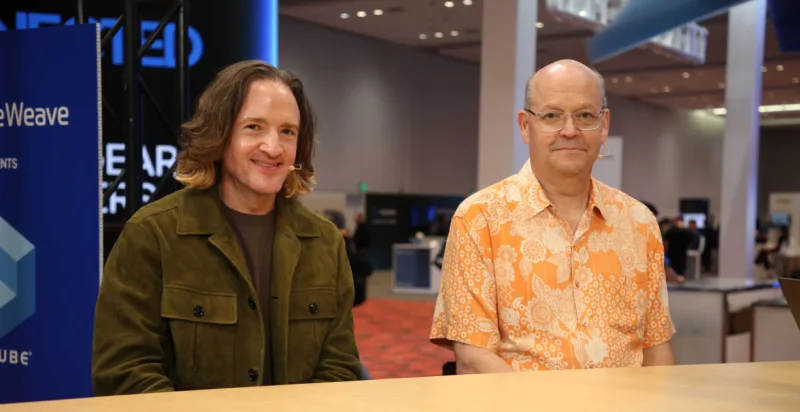
CrowdStrike and CoreWeave Partner to Automate AI Security at Machine Speed
As cyberattackers breach systems in seconds, CrowdStrike and CoreWeave are embedding automated defenses throughout AI infrastructure, turning attacks into training data for faster response.