IonQ Unveils Superion 256, a Mass-Producible Quantum System
IonQ has introduced Superion 256, its sixth-generation quantum computer featuring 256 qubits and control chips manufactured through conventional semiconductor processes, enabling high-volume production.
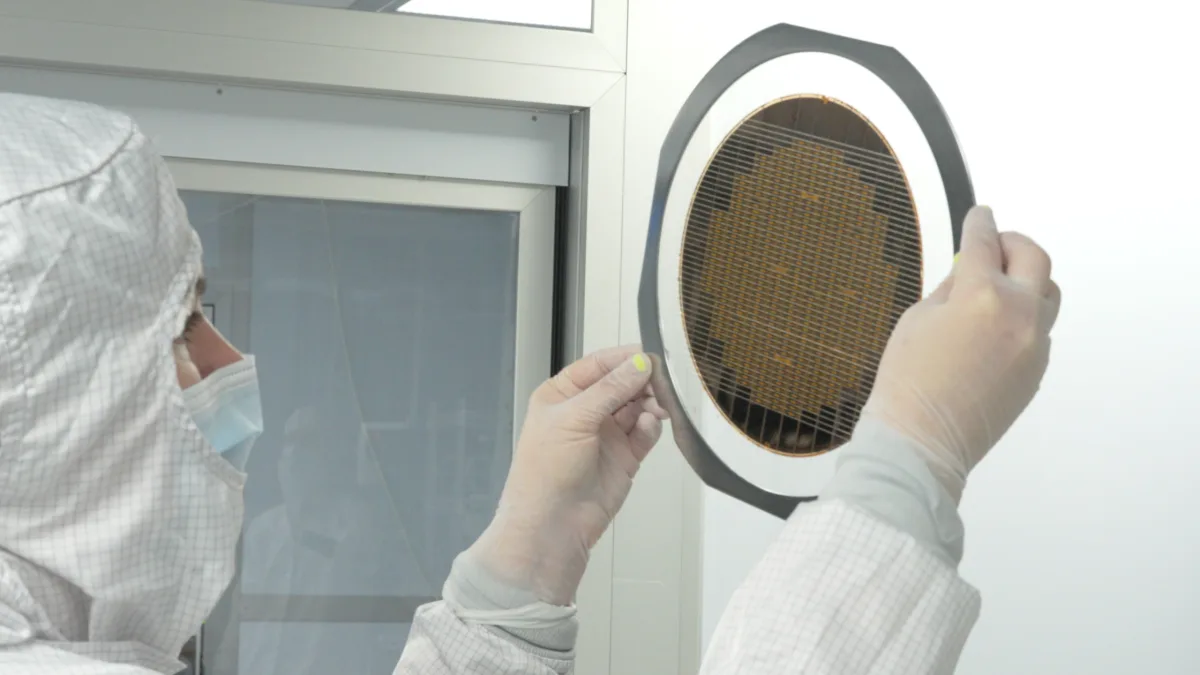
Quantum computing firm IonQ Inc. unveiled Superion 256 today, a 256-qubit quantum computer that relies on control chips produced using standard semiconductor fabrication methods. This approach, the company contends, makes it feasible to manufacture these systems at scale rather than as one-off units. The Superion 256 represents IonQ's sixth-generation quantum computer, with the company planning to base all future systems on this same architecture. The company secured a pre-sale for the initial unit during the first quarter, and production units will be accessible through IonQ's cloud platform.
SkyWater Technology Inc., the foundry that IonQ agreed to acquire in January for $1.8 billion, supplies the control chips. At this facility, IonQ has completed fabrication of its first fully integrated 256-qubit quantum processing units and has trapped ions in prototype systems currently being constructed at multiple U.S. locations. During the first half of 2026, the chip underwent six tapeouts. Partnering with SkyWater's quantum foundry reduced the design cycle from nine months to two months, and the collaboration generated 12 times more wafer lots over a six-month span compared to IonQ's previous foundry partner.
The system incorporates Electronic Qubit Control, a technology IonQ obtained through its $1.075 billion acquisition of Oxford Ionics Ltd. last year. Trapped-ion quantum computers have traditionally relied on laser arrays to manage qubit control, but in Superion, the electronic control components are integrated directly onto the chip itself.
IonQ achieved its 99.99% two-qubit gate fidelity record in October using the same design. A Superion system fits within a standard server rack, consumes less power than a rack of graphics processing units, and its cooling system integrates with typical data center infrastructure.
Superion 256 is the first quantum computer platform designed to be built by the hundreds rather than one at a time
Niccolo de Masi, Chairman and Chief Executive of IonQ
The platform architecture allows the same ion qubits and control electronics to scale from 256 qubits up to millions. Superion 10K, currently under development, integrates CMOS technology on the chip and represents the first generation designed to execute Walking Cat, IonQ's fault-tolerant architecture that the company published in April.
Chris Ballance, president of quantum computing at IonQ, characterized Superion as "the most important inflection point the quantum computing industry has yet seen." Ballance projected that full fault tolerance would be achieved in an IonQ laboratory by 2027, with a commercially viable manufacturable version arriving in 2028. Eliminating laser-based control is projected to reduce the cost per qubit by more than 300 times across the entire roadmap.
IonQ released a resource estimate today for executing Shor's algorithm against secp256k1, the elliptic curve cryptography standard underlying bitcoin. The company's researchers calculated the operation would require 19,397 physical qubits and take 25.7 days, a resource requirement consistent with systems anticipated on the 2028 portion of the hardware roadmap.
Garrison Buss, chief technology officer and co-founder of post-quantum cryptography firm QuSecure Inc., noted that elliptic-curve cryptography itself, rather than bitcoin specifically, represents the actual concern. Over the last 15 years, elliptic curves have become the foundation for most public-key cryptography on the internet, and the compact key sizes that enabled this shift also make these curves a more economical target for quantum attacks. Elliptic curves underpin code signing and certificate hierarchies. Buss acknowledged in remarks sent to SiliconANGLE that the estimate assumes error rates not yet demonstrated at such a scale, "but the direction is not in doubt."
Customers can place orders immediately, with initial deliveries scheduled for 2027.
Read more

Identity governance faces new test as AI agents proliferate across enterprises
Autonomous AI agents are forcing organizations to rethink how they manage access and permissions at machine speed. SailPoint's Navigate conference will explore how identity security must evolve to handle this expanding population of non-human actors.

Vertical AI and Purpose-Built Hardware Drive Next Wave of Technology Growth
Specialized AI systems tailored to specific industries are emerging as the primary engine for the next phase of technology expansion, according to insights from the Bank of America Private Tech Trailblazers Conference 2026.
CrowdStrike and CoreWeave Partner to Automate AI Security at Machine Speed
As cyberattackers breach systems in seconds, CrowdStrike and CoreWeave are embedding automated defenses throughout AI infrastructure, turning attacks into training data for faster response.