Half of Americans View AI Relationships as Infidelity, Survey Finds
A new survey reveals that 50.5% of U.S. adults consider romantic or sexual engagement with AI companions a form of cheating, though the broader population shows significant discomfort with the practice regardless of terminology.

Slightly more than half of American adults believe that engaging in a romantic or sexual relationship with an artificial intelligence partner constitutes cheating, according to research conducted by AI Girlfriend Coach. The survey polled 2,150 U.S. adults via SurveyMonkey Audience on August 26 and 27, 2026, with 1,709 responses retained following quality screening that excluded 441 entries. Participants answered questions about how they would perceive a partner's intimate involvement with an AI, what motivates people to use these services, and whether they themselves could form genuine emotional connections with such systems.
The question warrants serious consideration given how AI companions function in practice. These systems engage in flirtation, retain and spontaneously reference previous conversations, maintain relationships over extended periods, and simulate intimacy with sufficient realism that users report experiencing grief when a model is discontinued. Unlike traditional pornography or fictional characters, AI companions respond uniquely to each individual user, and the relationship evolves through ongoing interaction rather than remaining static for all users.
AI romance does not fit any existing definition of cheating
Traditional infidelity frameworks presuppose a third party who can be identified, blamed, or abandoned, a condition that AI romance eliminates while preserving many surrounding elements. Secrecy, emotional investment, sexual material, and significant portions of attention directed away from a partner's awareness remain present even without another human involved.
Scholars studying relationships have long recognized emotional infidelity as inherently harmful rather than merely a weaker form of sexual infidelity, and AI companions fall squarely into this emotional category while simultaneously producing chat logs and images resembling sexual infidelity. Neither framework typically used in couple disputes adequately describes the phenomenon.
Regulatory bodies have encountered the same conceptual problem from a different angle. China implemented rules governing anthropomorphic AI services on July 15, 2026, while California maintains existing companion-chatbot legislation and New York lawmakers enacted additional AI-companion measures in 2026. Most regulatory attention concentrates on protecting minors, requiring disclosure, and establishing crisis protocols, leaving the implications for adult relationships to individual households.
The survey contradicts assumptions that this concern primarily affects single individuals. Engaged and married respondents reported using AI girlfriend or boyfriend applications at nearly double the rate of single respondents, 30.7% compared to 16.3%.
The discomfort runs wider than the cheating label
An additional 21.2% of respondents declined to use the term cheating but expressed discomfort with a partner engaging in such behavior. Combined, these groups represent 71.7% of respondents who establish some boundary around AI intimacy, while fewer than three in ten (28.3%) dismissed the concern by arguing that AI cannot constitute a real relationship.
The disagreement fundamentally concerns not linguistic precision but behavioral acceptability, since a partner need not lose a definitional argument about infidelity for the conduct to cause relational harm. Approximately seven in ten respondents are imposing some form of restriction on AI intimacy regardless of the terminology employed.
Among those who did apply the cheating label, 33.4% determined that any romantic or sexual contact with an AI already violates boundaries, while 17.1% established the threshold at the emergence of emotional attachment rather than at the technology itself.
The people open to AI feelings judge AI romance more harshly
Respondents who acknowledged the possibility of developing genuine romantic feelings for an AI identified it as cheating at a rate of 73.0%, compared to 41.2% of those who rejected the possibility of such feelings. This thirty-two-point gap contradicts intuitive expectations that skeptics would enforce stricter standards while those open to AI attachment would be more permissive.
Actual experience with these products follows the same counterintuitive pattern. Current users of AI companions labeled the behavior as cheating at 80.6%, former users at 60.2%, and those with no experience at 44.0%. Familiarity with the technology correlates with stricter rather than more lenient judgment.
Once individuals accept that AI-directed feelings can be authentic, the distinction between real and artificial relationships loses explanatory power in determining whether a boundary has been crossed. The synthetic nature of the attachment target ceases to function as a justification, leaving those with direct experience applying the most stringent standards.
AI companionship is not primarily about sex
When asked to identify the primary motivation for using an AI companion, 56.6% selected having someone to converse with or alleviating loneliness, compared to 10.3% who selected affection, romance, or sex. Loneliness emerged as the leading reason across all measured demographic groups.
This finding complicates rather than simplifies the cheating discussion. If AI companionship functioned primarily as a sexual outlet, it would align reasonably well with existing norms governing pornography, since most couples develop some mutual understanding in that domain. An ongoing emotional relationship demanding attention, openness, and intimacy presents a harder categorization problem, more closely resembling an undisclosed intimate friendship than adult entertainment.
Respondents largely perceive these products as addressing loneliness rather than sexual need, irrespective of how they are marketed, which places greater expectations on the category than typical promotional messaging acknowledges.
Couples will have to define these boundaries themselves
Every previous iteration of comparable questions has ultimately been resolved through private negotiation. Partners establish their own rules regarding pornography, communication with former partners, retention of dating applications, the appropriate scope of private friendships, and acceptable professional closeness. None of these questions has a universal answer, yet each benefited from decades of accumulated social convention to reference.
AI companions lack such established precedent. The survey documents opinion divided almost precisely in half on the terminology, a substantial majority indicating the behavior warrants discussion, and an absence of conventional standards to guide couples. Partners face the task of creating their own frameworks for a technology most have not experienced, during a period of rapid category expansion.
Explicit AI provisions will likely become as routine in relationship discussions as deleting applications has become, though not without considerable preventable conflict. For individuals currently using these products, the data suggests that approximately seven in ten people would establish some form of boundary around the practice.
AI Girlfriend Coach evaluates AI companion platforms through direct testing and produces original research examining the industry and its users. The survey includes published methodology, questionnaire details, and information about excluded responses.
Read more

Identity governance faces new test as AI agents proliferate across enterprises
Autonomous AI agents are forcing organizations to rethink how they manage access and permissions at machine speed. SailPoint's Navigate conference will explore how identity security must evolve to handle this expanding population of non-human actors.

Vertical AI and Purpose-Built Hardware Drive Next Wave of Technology Growth
Specialized AI systems tailored to specific industries are emerging as the primary engine for the next phase of technology expansion, according to insights from the Bank of America Private Tech Trailblazers Conference 2026.
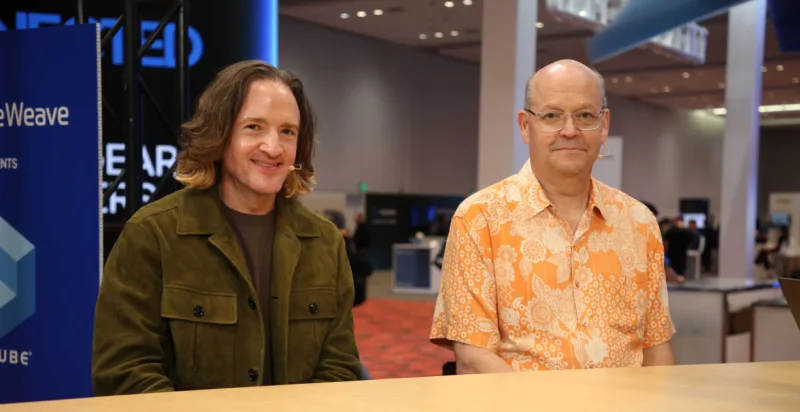
CrowdStrike and CoreWeave Partner to Automate AI Security at Machine Speed
As cyberattackers breach systems in seconds, CrowdStrike and CoreWeave are embedding automated defenses throughout AI infrastructure, turning attacks into training data for faster response.