Google Cloud Positions AI Agents as the Glue for Distributed Supercomputing
As high-performance computing and artificial intelligence converge, researchers face a new bottleneck: orchestrating compute resources scattered across multiple clouds and on-premises systems. Google Cloud is pitching AI agents as the solution.
The intersection of artificial intelligence and high-performance computing is accelerating beyond the pace at which many research teams can keep up. Access to sufficient computing power remains constrained, and scientific workloads increasingly span both cloud platforms and local infrastructure. The definition of success in this space is shifting away from raw computational speed toward the speed of reaching meaningful results.
This transformation took center stage at SC26 in Chicago, where supercomputing and AI communities gathered. Scientists are demanding more computational resources than any single facility can supply, prompting cloud vendors to market AI agents as a unifying layer across fragmented infrastructure. According to Annie Ma-Weaver, head of high-performance computing product at Google Cloud, a unit of Google LLC, this addresses a critical gap in the researcher workflow.
We are powering that flexibility. and we understand that researchers really need access to compute, but they don't necessarily wanna learn all the nitty-gritty of how to tie that compute together, how to get it orchestrated across all their different clusters.
Annie Ma-Weaver, Google Cloud
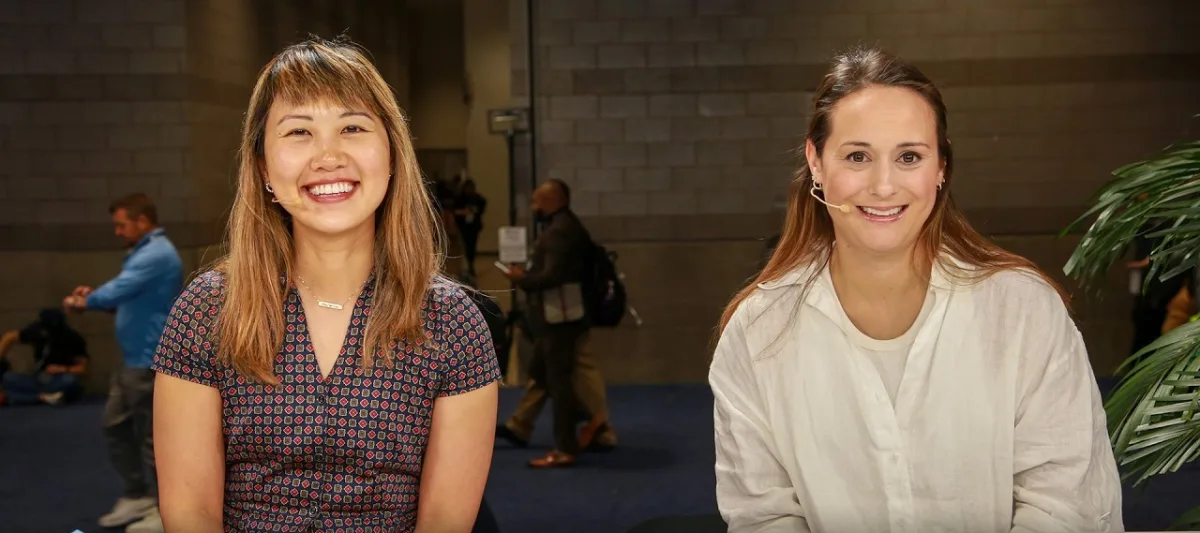
Ma-Weaver and Megan Gawlik, high-performance computing product manager at Google Cloud, discussed these developments during an exclusive interview at SC26 with theCUBE Research's John Furrier and Gemma Allen, broadcast on theCUBE, SiliconANGLE Media's livestreaming studio. Their conversation centered on how AI agents are reshaping access to distributed computing, transforming simulation workflows and weather prediction, while also raising concerns about how researchers validate AI-assisted findings.
Agentic HPC shifts the focus from flops to discovery
Google Cloud's approach to agentic high-performance computing rests on three foundational elements: specialized hardware designed for specific tasks, open-source resource management tools including Slurm and Kubernetes, and collaborative AI agents that work alongside researchers. The company unveiled this framework through announcements made at SC26. These agents are already accelerating scientific work by helping researchers review published studies, identify and fix programming errors, and develop research hypotheses—work that previously consumed weeks but now takes minutes, according to Gawlik.
You're able to go explore more scenarios and you might be using that same time to just go sanity test that hypothesis that's coming out. I think it's not only a speed thing, but I think it's an accuracy thing that you're able to really get from that additional speed.
Megan Gawlik, Google Cloud
The impact extends to computational simulation. Traditionally, engineers would execute simulations across every possible combination of input parameters. The new approach leverages AI to pre-screen which parameter combinations warrant testing, as Ma-Weaver explained.
What we're seeing, for example, with computer-aided engineering, is that you can actually identify ahead of time which are non-essential parameters and you don't run the simulation, thereby reducing the total simulation time. We also find that if you're doing design and you have initial prototypes, you can generate new, novel and creative prototypes.
Annie Ma-Weaver, Google Cloud
Weather forecasting has already begun deploying these advances in operational systems. The National Oceanic and Atmospheric Administration's forecasting infrastructure, which features tightly integrated workloads that historically ran exclusively on local systems, now operates on Google Cloud infrastructure. The National Hurricane Center deployed Google's WeatherNext model to forecast the trajectory and strength of Hurricane Melissa in October 2025, Gawlik noted. However, this growing dependence on machine-generated outputs introduces a potential hazard, particularly for early-career researchers who might substitute AI recommendations for developing their own analytical judgment, she cautioned.
https://www.youtube.com/embed/gRdHACEvoyI?feature=oembed
AI is still not perfect. I think even though there's an output, we call it AI slop. It could still be slop.
Megan Gawlik, Google Cloud
Read more
Anthropic Researcher Claims Claude Proved the Riemann Hypothesis
Levent Alpöge, a researcher at Anthropic, announced he used Claude to prove one of mathematics' most significant unsolved problems, though the company has not officially confirmed the breakthrough.

Beyond Token Prices: Why Enterprise AI Cost Accounting Demands a Deeper Look
Companies pursuing multi-model AI strategies are discovering that token pricing alone masks the true cost of AI deployment. New data shows task efficiency and user consumption patterns drive the real bill.

Anthropic's IPO Surge Masks Broader AI Market Jitters as OpenAI Waits in the Wings
Anthropic's initial public offering delivered a solid 17% first-day gain, but the move may have signaled caution rather than momentum across the AI sector, with broader market concerns weighing on technology stocks.