Google Boosts Gemini's Task Mode With Faster Model and E-Commerce Tools
Google is upgrading its Gemini AI assistant with a new model optimized for multistep workflows, adding payment tokenization support and making the feature free across six markets.
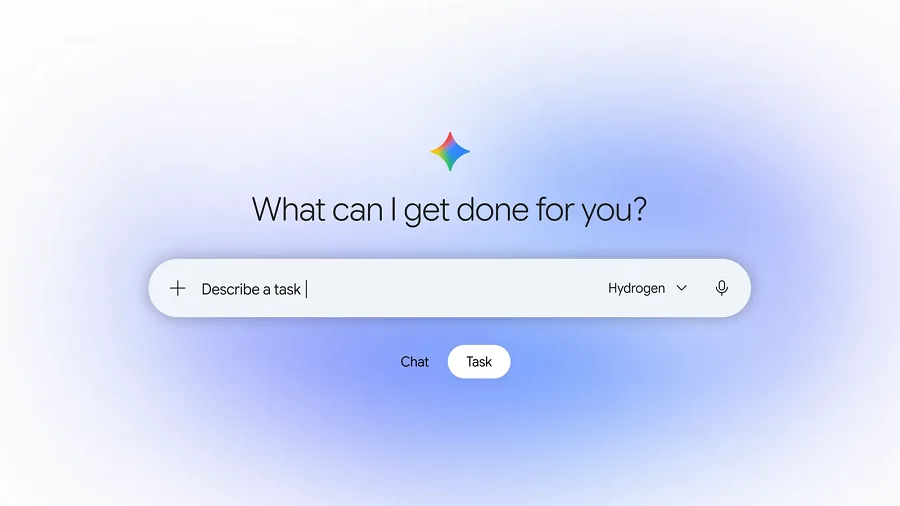
Google is rolling out an enhanced version of Gemini designed to handle complex, multistep operations more effectively. Vice President Josh Woodward announced the improvements in a Tuesday blog post focused on the assistant's capabilities.
Gemini operates through two distinct interface modes. The Chat mode delivers straightforward answers to user queries. Task mode, by contrast, tackles sophisticated workflows including appointment scheduling and product comparison across multiple online retailers. This week's update centers on Task mode enhancements.
The upgrade transitions Task mode to Gemini 4 Hydrogen, Google's latest language model. While Hydrogen lacks some capabilities of Gemini 4 Carbon, the company's most powerful model, it delivers substantially better cost efficiency. Processing speed represents another advantage: Hydrogen executes certain operations 2.8 times faster than the previous baseline model.
Hydrogen achieves faster performance partly through parallelization, running sequential steps simultaneously. In Task mode, users can provide guidance after each step to shape the model's direction. Before executing sensitive actions like completing purchases, the model requests explicit user approval.
Google Wallet currently handles transactions within Task mode. Woodward indicated that partnerships with American Express, Mastercard, and Visa will introduce payment tokenization—a security method that substitutes a token for the actual card number when communicating with merchants, reducing exposure to data breaches.
The company also plans to implement the Universal Commerce Protocol, or UCP, which streamlines how AI agents communicate with e-commerce platforms and reduces transaction errors.
Task mode leverages information from other Google services, including Gmail, to inform its recommendations. For instance, the agent might reference previous purchases when suggesting new items. A key differentiator for Gemini is its ability to access such data while keeping it within Google's infrastructure—a distinction from many competing agents.
When you assign Gemini a task, it uses Google Cloud's Agent Compute Engine to work in a hardware-isolated virtual machine that's dedicated to your account and never shared with other users. Each virtual machine is sandboxed, so Gemini works in a separate, isolated environment that's regularly tested by our security red teams.
Josh Woodward
As part of this update, Google has made Task mode available at no cost in the United States, Japan, South Korea, Canada, Australia, and India. This pricing approach contrasts with Anthropic and OpenAI, which charge for similar functionality in their respective AI assistants—a move that could pressure competitors to reconsider their commercial strategies.
Read more

Anthropic Researcher Claims Claude Proved the Riemann Hypothesis
Levent Alpöge, a researcher at Anthropic, announced he used Claude to prove one of mathematics' most significant unsolved problems, though the company has not officially confirmed the breakthrough.

Beyond Token Prices: Why Enterprise AI Cost Accounting Demands a Deeper Look
Companies pursuing multi-model AI strategies are discovering that token pricing alone masks the true cost of AI deployment. New data shows task efficiency and user consumption patterns drive the real bill.

Anthropic's IPO Surge Masks Broader AI Market Jitters as OpenAI Waits in the Wings
Anthropic's initial public offering delivered a solid 17% first-day gain, but the move may have signaled caution rather than momentum across the AI sector, with broader market concerns weighing on technology stocks.