Five9 Pivots to Human-AI Collaboration Model for Contact Centers
Five9's new Humantic approach combines human agents with AI to handle the most valuable and complex customer interactions, rejecting the industry's push toward full automation.

The contact center industry has spent recent years chasing higher automation rates, but that metric is proving inadequate. Customers consistently prefer speaking with people for high-stakes, intricate, or emotionally sensitive matters—precisely the interactions that generate the most value. Five9 Inc., a cloud-based contact center software company, is responding with Humantic, a framework that positions human agents and AI systems as collaborators rather than competitors vying for the same work.
Amit Mathradas, who took over as chief executive officer of Five9 in February after leading Nintex Global Ltd. and previously serving as president and chief operating officer of Avalara Inc., sees Humantic as a market correction. Full automation was never the realistic endgame, even as the industry appeared to chase it. "We at Five9 have a very strong belief that the future world is what we are calling Humantic," Mathradas said. "Humantic is the combination of humans and agentic sitting in your contact center. I think there is a misconception that all humans are going away in the contact center. That is not true."
Mathradas shared these views during "The AI ROI in Contact Center Summit," where he spoke with Bob Laliberte of theCUBE Research and Zeus Kerravala of ZK Research in an exclusive broadcast on theCUBE, SiliconANGLE Media's livestreaming platform. The conversation explored Five9's rationale for building a Humantic model and the factors that distinguish successful contact center deployments from stalled ones.
Three Categories of Calls Belong with Humans
Five9 segments customer interactions into three buckets that demand human handling: complexity, value, and vulnerability. Conversations involving a customer of exceptional importance to the business, someone processing grief, or decisions requiring navigation through intricate financial products all require a person. AI takes on the high-volume, routine work—password resets, account balance inquiries and similar tasks.
Research conducted by Five9 uncovered a striking disconnect. "Ninety-nine percent of business practitioners who are deploying AI think their contact centers and their serviceability has gotten better. Only 66% of actual users think the contact center has gotten better. More than 50% of them are saying the reason is, 'I want to access a human. and I don't get that.'," Mathradas said.
This gap between practitioner expectations and user satisfaction has shaped Five9's strategy. Rather than forcing customers into a completely new technology ecosystem, the company has adopted an open platform approach. The company recently expanded its AI Agent Connect program to include third-party voice AI providers. PODS Enterprises LLC, a moving and storage firm, exemplifies this strategy: the company expects to route more than 100,000 calls through Five9's Voice AI Agents by the end of the year, achieving a 44% containment rate that surpassed its own projections.
https://www.youtube.com/embed/CnUvrWus7Xw?feature=oembed
Looking ahead, Mathradas emphasized the importance of orchestration. "The next big thing is around how these systems of record all work together to enable the next shift that is coming," he explained. "Orchestration is the next big layer that a lot of customers should be thinking about and companies like us are thinking about in terms of where it needs to go."
Read more
Identity governance faces new test as AI agents proliferate across enterprises
Autonomous AI agents are forcing organizations to rethink how they manage access and permissions at machine speed. SailPoint's Navigate conference will explore how identity security must evolve to handle this expanding population of non-human actors.

Vertical AI and Purpose-Built Hardware Drive Next Wave of Technology Growth
Specialized AI systems tailored to specific industries are emerging as the primary engine for the next phase of technology expansion, according to insights from the Bank of America Private Tech Trailblazers Conference 2026.
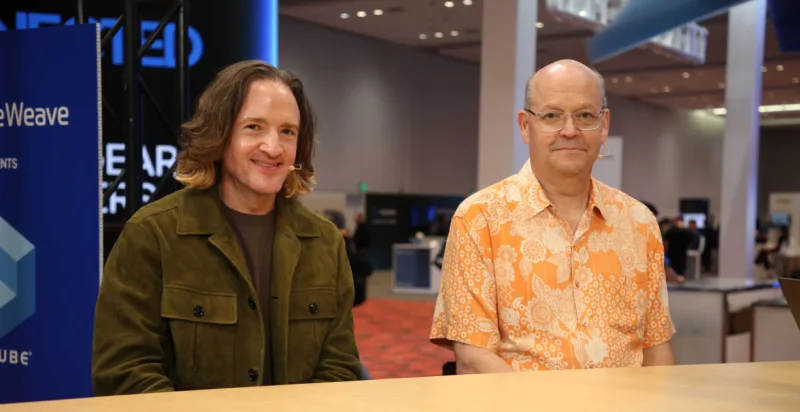
CrowdStrike and CoreWeave Partner to Automate AI Security at Machine Speed
As cyberattackers breach systems in seconds, CrowdStrike and CoreWeave are embedding automated defenses throughout AI infrastructure, turning attacks into training data for faster response.