Enterprise AI's Real Bottleneck: Token Costs, Agent Control and Infrastructure Choices
At Dell's AI Leadership Symposium, industry executives identified three critical challenges facing organizations deploying AI at scale: runaway token expenses, the need for runtime governance of autonomous agents, and a shift toward on-device and hybrid deployment models.
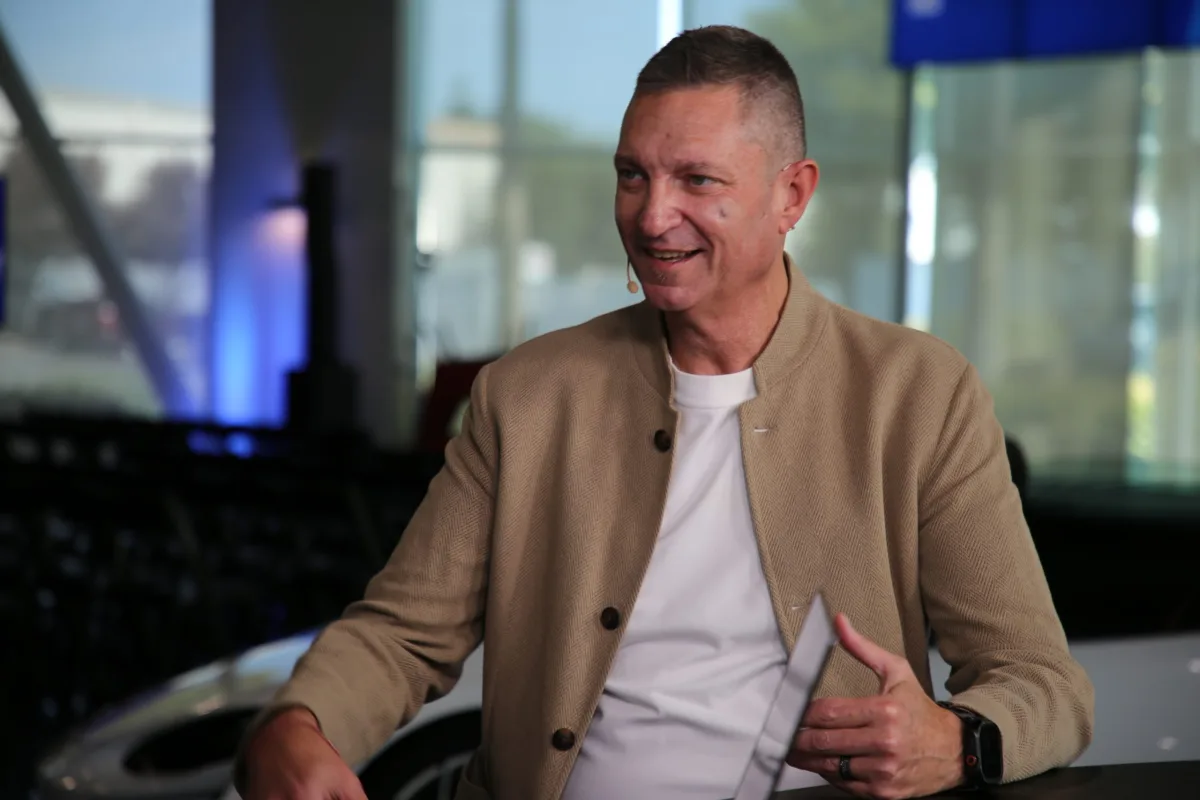
Bringing artificial intelligence workloads to production creates tangible operational hurdles for enterprise technology leaders. The most pressing concerns center on controlling spending, building infrastructure that can handle growing AI demands, and establishing oversight mechanisms that keep autonomous systems accountable while protecting sensitive information.
These tensions took center stage during Dell Technologies Inc.'s "AI Leadership Symposium," where cost management and governance emerged as dominant conversation threads. As organizations expand their AI deployments, infrastructure expenses and model licensing fees climb sharply, while the introduction of autonomous agents raises fresh questions around safety, visibility and data protection.
Simultaneously, enterprises are experimenting with diverse approaches to running AI systems—from private cloud setups to models executing directly on end-user hardware. This diversification is generating appetite for enterprise AI infrastructure and vendor partnerships capable of supporting multiple deployment scenarios.
No one is asking whether to adopt AI; that's pretty much a done deal. They're asking who controls it, where it runs and whose law it operates.
John Furrier, executive analyst at theCUBE Research
Furrier conducted conversations with technology leaders from Dell, Deepgram Inc., Singulr AI Inc., MisaLabs Inc. and Intel Corp., among others, during the symposium. The discussions focused on the infrastructure, partnerships and computational resources required to scale AI operations effectively.
https://www.youtube.com/embed/A-0d6dwvYEo?feature=oembed
Token Spending Pressures Force Budget Rethinking
Cloud token expenses represent a persistent strain on enterprise AI spending plans. Many organizations are seeking relief through alternative approaches, according to Helen O'Sullivan, AI business development manager and solutions specialist at Dell.
A lot of our customers I support in the Bay Area, they're dealing with this real immediate struggle of running through their token budget in a matter of weeks that they had allotted for months. You still use those frontier models, but you use the open source and infrastructure on-prem to at least eliminate some of the token stress and token maxing going on right now.
Helen O'Sullivan, Dell
Enterprises can also maximize returns on existing data center investments when assessing AI infrastructure spending. Dell and Intel are helping clients explore these options, according to Tim Wood, sales director for the Northwest region at Intel.
https://www.youtube.com/embed/Xg7XBk0Nweo?feature=oembed
A lot of enterprises already have [central processing units] in their data center. There may be existing resources and headroom in the infrastructure they already have that's capable of doing some of these next-generation apps and workloads.
Tim Wood, Intel
Agent Governance and Security Become Urgent Priorities
As organizations deploy increasing numbers of AI agents, they face mounting pressure to track agent actions and verify alignment with organizational policies and business objectives. This requires runtime governance systems capable of evaluating agent behavior as it occurs, according to Shiv Agarwal, co-founder and chief executive officer of Singulr AI Inc.
[It's] as simple as an action where it reaches out to the internet to get some data or sends out an email to a private account or something. That could be deeply hidden inside an agentic action.
Shiv Agarwal, Singulr AI Inc.
Effective AI governance also requires establishing guardrails around data access and processing workflows. Many CIOs favor virtual private cloud architectures to maintain sensitive data within secured perimeters, according to Sri Viswanath, founder and chief executive officer of Sycamore Labs Inc.
They're also trying to architect in a way that all of the data stays there. They don't trust sending it outside because then we don't know where it goes.
Sri Viswanath, Sycamore Labs Inc.
https://www.youtube.com/embed/ElKU0iRM630?feature=oembed
The rapid pace of AI advancement complicates governance implementation. Organizations must maintain system reliability and predictability even as AI capabilities advance, according to Victor Jakubiuk, co-founder of MisaLabs Inc.
AI has no limit to the speed of development, speed of progress. As an enterprise, as that AI lead, you want to be able to take the latest and greatest and stay on top.
Victor Jakubiuk, MisaLabs Inc.
Custom Solutions and Device-Level Deployment Reshape Infrastructure Strategies
https://www.youtube.com/embed/mFpqDnWRBU4?feature=oembed
Deepgram is collaborating with Dell and Fortanix Inc. to move its voice AI models beyond cloud environments and onto customer hardware. Potential use cases span from voice response systems serving small businesses to AI-powered laptops for educational users, according to Nick Mann, staff technical program manager at Deepgram.
I want our models on those, on the hardware, to run natively. Air-gapped. That's where we want to get to. That's where AI as a whole needs to start meeting people where they are and how they're going to use it.
Nick Mann, Deepgram
https://www.youtube.com/embed/s_I3bGW1AN4?feature=oembed
Deepgram's strategy reflects a wider industry movement toward building AI systems tailored to customer preferences and use cases. In Silicon Valley, where sophisticated technology buyers frequently construct proprietary solutions rather than adopting off-the-shelf offerings, Dell is broadening its partner network to satisfy this demand, according to Sean O'Connor, regional manager of ENT West, large enterprise and acquisition, at Dell.
https://www.youtube.com/embed/videoseries?list=PLcDFYmuiJhfE
For us, that notion of ecosystem is starting to change. Today we're here with Intel [Corp.], we're here with SHI [International Corp.], we're here with Microsoft [Corp.]. But that ecosystem also now is starting to bleed into private equity and venture capital.
Sean O'Connor, Dell
Read more

Anthropic Researcher Claims Claude Proved the Riemann Hypothesis
Levent Alpöge, a researcher at Anthropic, announced he used Claude to prove one of mathematics' most significant unsolved problems, though the company has not officially confirmed the breakthrough.

Beyond Token Prices: Why Enterprise AI Cost Accounting Demands a Deeper Look
Companies pursuing multi-model AI strategies are discovering that token pricing alone masks the true cost of AI deployment. New data shows task efficiency and user consumption patterns drive the real bill.
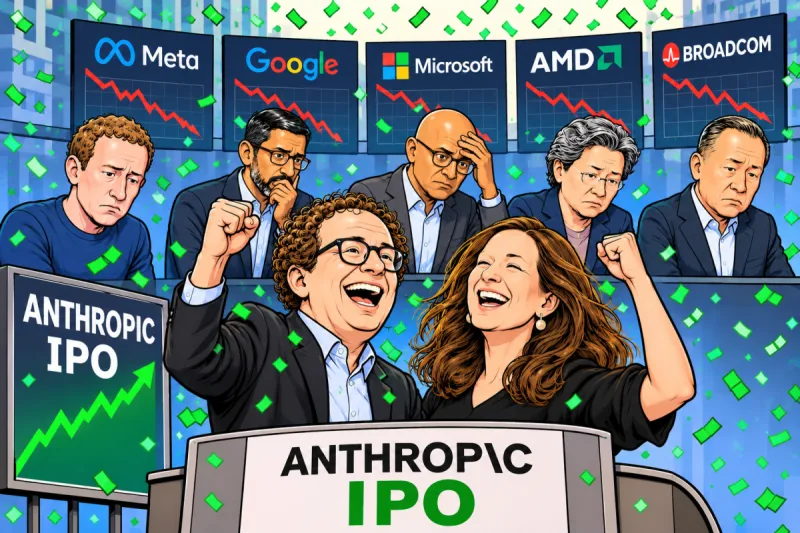
Anthropic's IPO Surge Masks Broader AI Market Jitters as OpenAI Waits in the Wings
Anthropic's initial public offering delivered a solid 17% first-day gain, but the move may have signaled caution rather than momentum across the AI sector, with broader market concerns weighing on technology stocks.