Dell's Private Cloud Play: Why Enterprises Are Rethinking On-Premises Infrastructure for AI
As organizations move beyond AI pilots toward production deployments, private cloud is evolving from a legacy alternative into purpose-built infrastructure designed for enterprise intelligence. Dell's disaggregated approach is reshaping how companies think about cost and operational flexibility.
The private cloud landscape is shifting. What was once positioned as a secondary option to public cloud services is now emerging as a deliberate architectural choice—specifically engineered to support enterprise AI at scale. Dell Technologies Inc. exemplifies this transformation through its Private Cloud offering, unveiled last year via the Dell Automation Platform, a software layer designed to streamline deployment and operation of disaggregated infrastructure with automated onboarding and unified management capabilities.
The rationale behind this shift is straightforward: on-premises systems can deliver superior economics and operational control for AI inference workloads. Organizations are discovering that housing these operations locally rather than in public cloud environments often yields better cost profiles and greater flexibility in how they manage their computing resources.
The private cloud is undergoing a strategic reset as enterprises move from AI experimentation to operational intelligence. The next generation of private cloud matters. Enterprises need infrastructure that is open, automated and adaptable enough to support multiple application and AI environments without forcing teams into another silo. Dell's move toward disaggregated infrastructure and automated private-cloud operations speaks directly to that need, making private cloud less about infrastructure ownership and more about creating an agile platform for the intelligent enterprise.
Paul Nashawaty, theCUBE Research
TheCUBE is hosting a virtual event titled "Rethinking Private Cloud for the Age of Intelligence" on September 23, bringing together Dell executives and industry practitioners to examine how private cloud can serve as a foundation for AI operations without introducing additional complexity, organizational silos, or forced infrastructure replacements. The discussion will center on how data infrastructure and intelligent operations combine to deploy, manage and expand private cloud systems built on modular hardware foundations.
Economics Driving Adoption
The financial case for private cloud is becoming increasingly compelling as memory-intensive agentic AI gains traction. Advanced memory tiering—which pools physical DRAM with faster, lower-cost NVMe storage into a unified logical layer—represents one mechanism for reducing hardware expenditure. These economic factors are fueling broader private cloud adoption, according to theCUBE's research team.
Dell's disaggregated cloud model can deliver up to 65% cost savings relative to hyperconverged infrastructure approaches. The Dell Private Cloud with PowerStore adds another dimension through six-to-one data reduction, alongside operational efficiencies and independence from hyperconverged infrastructure constraints. Such metrics underscore why enterprises are scrutinizing the financial dimensions of AI infrastructure as deployments proliferate.
Enterprises are reaching a tipping point with ad-hoc infrastructure stacks as AI workloads and shifting virtualization licensing fundamentally alter total cost of ownership models. The market is moving away from tightly coupled, rigid bundles toward disaggregated, open architectures that allow compute and storage to scale independently. CIOs are no longer treating private cloud as a legacy holding area, but as a modular operational platform designed for predictable performance, data sovereignty and long-term cost control.
Dave Vellante, theCUBE Research
Event and Content Access
The September 23 virtual event will feature interviews and sessions available through theCUBE's website and YouTube channel, with on-demand access to all content following each presentation. SiliconANGLE will provide comprehensive coverage across its platforms.
For ongoing enterprise technology analysis, SiliconANGLE produces two regular programs: "theCUBE Pod," hosted by John Furrier and Dave Vellante and available on Apple Podcasts, Spotify and YouTube, covers major trends spanning AI, cloud, regulation and workplace dynamics; and "Breaking Analysis," also hosted by Vellante and distributed across the same platforms, examines top enterprise tech stories using theCUBE insights combined with spending data from Enterprise Technology Research.
Read more
Identity governance faces new test as AI agents proliferate across enterprises
Autonomous AI agents are forcing organizations to rethink how they manage access and permissions at machine speed. SailPoint's Navigate conference will explore how identity security must evolve to handle this expanding population of non-human actors.
Vertical AI and Purpose-Built Hardware Drive Next Wave of Technology Growth
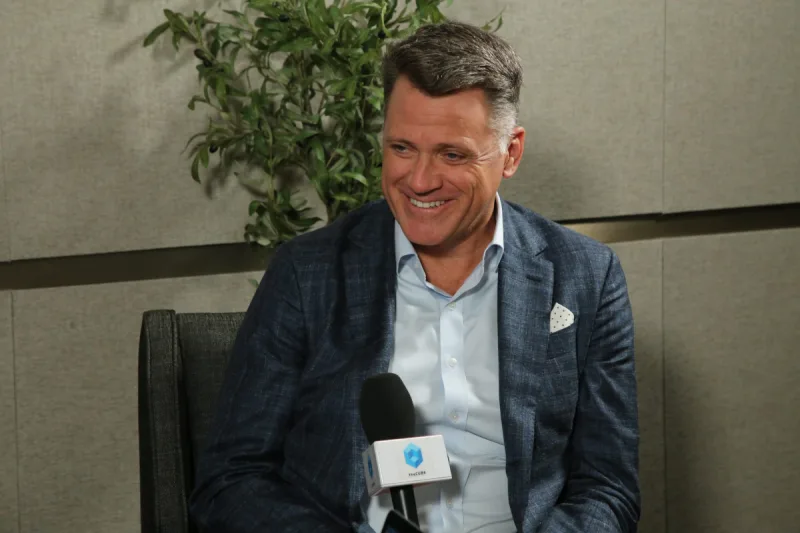
Specialized AI systems tailored to specific industries are emerging as the primary engine for the next phase of technology expansion, according to insights from the Bank of America Private Tech Trailblazers Conference 2026.
CrowdStrike and CoreWeave Partner to Automate AI Security at Machine Speed
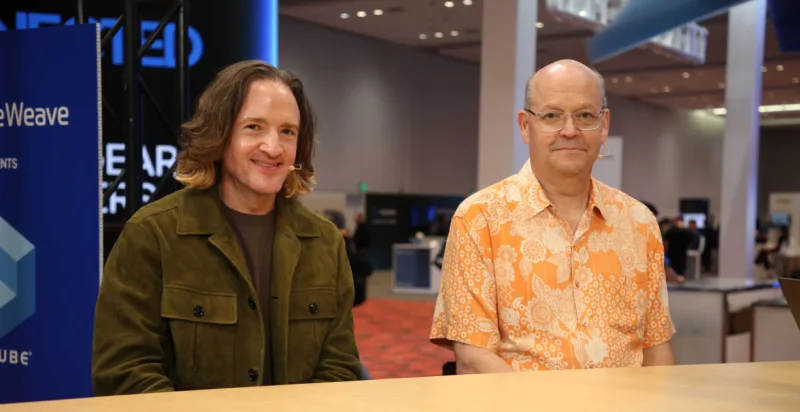
As cyberattackers breach systems in seconds, CrowdStrike and CoreWeave are embedding automated defenses throughout AI infrastructure, turning attacks into training data for faster response.