Dell Pivots Private Cloud Strategy as AI Workloads Reshape Enterprise Infrastructure Demands
Enterprises are rethinking private cloud architecture to balance cost control with AI-driven performance needs, moving away from tightly integrated systems toward disaggregated infrastructure that scales compute and storage independently.
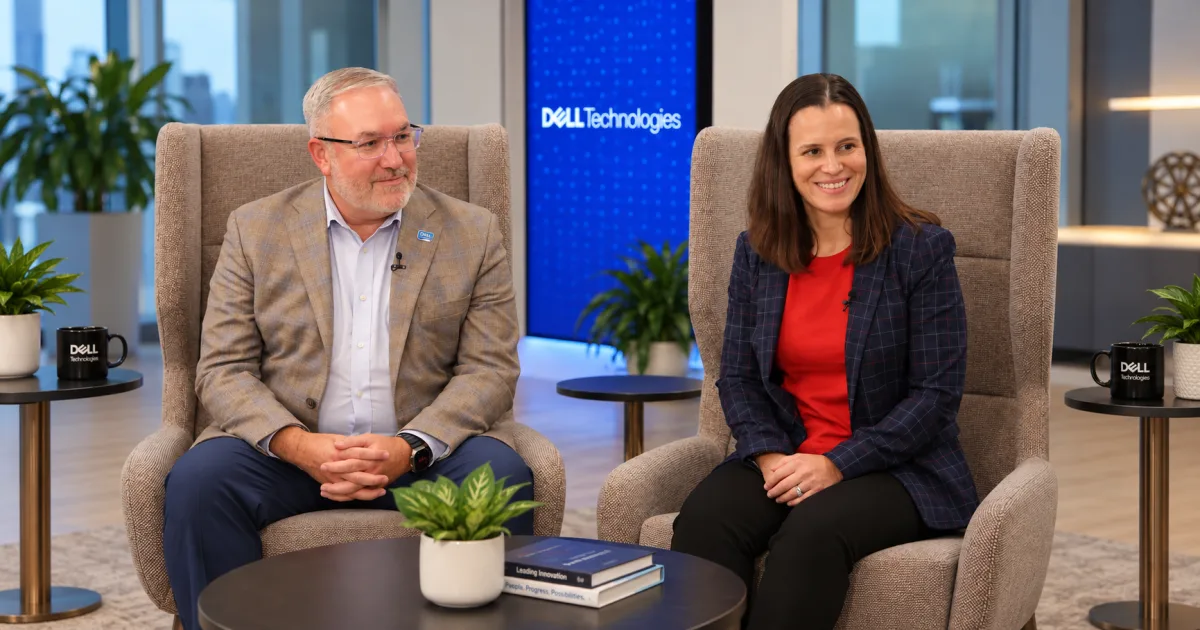
The role of private cloud infrastructure is shifting as companies reassess computational priorities in light of artificial intelligence adoption. Multiple factors are converging to drive this transformation: enterprises are scrutinizing public cloud expenditures more carefully, demanding stronger data governance, and requiring systems that can respond rapidly to the evolving demands AI places on processing power, storage capacity and network resources. Simultaneously, the diversification of virtualization approaches is pushing organizations toward infrastructure capable of supporting multiple operating environments.
Rather than simply replicating conventional data center models, enterprises are pursuing infrastructure that delivers cloud-like ease of use while permitting independent scaling of compute and storage resources. Dave Vellante, chief analyst at theCUBE Research, framed the challenge: "It's about economics, it's about control and it's about AI sovereignty. But to make private clouds viable in this AI era, some things have to change. There's a massive demand for disaggregated architectures and infrastructure, but customers, they don't want to be integrators all over again."
Shifting Enterprise Expectations
The resurgence of private cloud interest reflects a fundamental realignment in infrastructure priorities. While governance and data sovereignty remain significant concerns, cost efficiency, operational flexibility and protection of existing investments are ascending the priority hierarchy. Caitlin Gordon, vice president of product at Dell Technologies Inc., observed that "In some sense, private clouds are cool again. Having control is becoming top of mind for a lot of customers. But the environment has completely changed from what it was just a few years ago or, in some cases, just a few months ago."
The underlying challenge stems from how private cloud requirements have evolved alongside the applications they support. Expanding data volumes, budget pressures from infrastructure costs, and the desire to swap operating systems without hardware replacement are all reshaping expectations. Gordon noted that "Really, the number one thing that we hear from customers is cost, and then openness, flexibility and then simplicity. Bringing all three of those things together is critical for our customers because, ultimately, every dollar that they're spending on their IT budget is a decision that they're making and a trade-off that they're making."
This dynamic is fueling momentum toward disaggregated architectures. Hyperconverged infrastructure delivered operational simplicity through tight integration of compute and storage, but this approach often forced organizations to scale resources they did not require. A disaggregated model enables independent growth of these components while preserving an integrated management experience. Jodey Hogeland, PowerStore global evangelist at Dell, explained the advantage: "If all I need is to dynamically scale the compute infrastructure, I've got the freedom, the cost structures and the affordability to do that. If all I need to do is scale the storage infrastructure, I've got the freedom, the cost-effective capabilities to be able to do that."
Dell Private Cloud Architecture
Dell Private Cloud was engineered around this shift toward independent scaling while retaining the operational simplicity associated with hyperconverged systems. The platform decouples compute and storage while leveraging automation to manage the infrastructure as a unified system.
The design also accommodates the virtualization landscape transformation. Organizations that previously standardized on a single hypervisor are increasingly deploying multiple environments tailored to specific workload characteristics. Dell Private Cloud supports VMware, Red Hat OpenShift, Nutanix and Microsoft Azure Local, enabling organizations to run different software stacks on the same underlying hardware. Gordon emphasized that "Dell Private Cloud gives you a disaggregated infrastructure, the ability to buy just the infrastructure you need and then scale independently. But, importantly, it keeps the simplicity of HCI."
The capacity to transition between software environments without replacing physical infrastructure is emerging as a critical business consideration. While most current Dell Private Cloud installations still rely on VMware, many organizations are concurrently assessing alternative platforms. Gordon highlighted this strategic value: "The value prop they're buying into is the fact that they know they have the escape hatch to where they're going to go into the future. It's really that optionality that they're buying into."
PowerStore Elite and Storage Modernization
Storage infrastructure itself is undergoing redesign to accommodate AI workloads. Higher-performance applications demand faster data access at scale, while data centers confront physical limitations around rack density, power consumption and thermal management. Dell is addressing these requirements through PowerStore Elite, its newest primary storage system. The platform delivers up to 6:1 data reduction while improving performance and density relative to earlier iterations.
Hogeland described the performance gains: "We're delivering 3x the performance that we were in previous generations. We're delivering 3x the efficiencies that we were in previous generations. And we're delivering all of that in a 3-rack unit form factor." These density improvements extend beyond storage alone. Consolidating storage infrastructure can liberate rack space, power connections and cooling capacity that enterprises can repurpose for AI compute servers. Hogeland noted that "We have customers … having to accelerate infrastructure purchases to consolidate, to get more efficient."
Automation and Operational Management
Separating compute and storage introduces operational flexibility but also raises the potential for increased management complexity. Dell addresses this through the Dell Automation Platform, which applies lifecycle governance and infrastructure validation across the private cloud stack. The objective is to preserve the operational experience of hyperconverged systems without constraining customers to tightly coupled hardware.
Gordon reported that "Our test shows … up to 66% time savings with the Dell Private Cloud and all the automation software versus managing a 3-tier environment without that automation." The architecture also permits more granular infrastructure updates. Rather than deploying large updates across an entire integrated stack, administrators can target storage, compute or individual security patches independently. Gordon explained: "We can enable an update of just the storage or just the compute or a security patch. And that allows customers to have the agility that they need today for updates but still have the trust in the validation and the simplicity that they're used to."
Storage systems themselves are becoming increasingly autonomous. PowerStore incorporates Dynamic Node Affinity, which determines volume placement and adjusts backend routing based on performance metrics and workload characteristics. Hogeland observed that "We're really having conversations now about autonomous infrastructure. The storage is so intelligent, it's so smart, that it's making decisions in and of itself."
PowerStore Elite Hardware and Integration
PowerStore Elite incorporates hardware modifications intended to boost density while simplifying administration. The system features 40 E3 SSD bays and relocates NVRAM and battery backup functions into the controllers, dedicating the front of the system entirely to storage capacity. Dell has also adopted standard OCP network interface cards, offering greater connectivity flexibility. The more substantial innovation involves how storage participates in Dell's broader private cloud automation framework.
The Dell Automation Platform Orchestrator can provision a private cloud using configuration files and deployment blueprints. The workflow encompasses PowerStore hardware validation, compute and networking setup, hypervisor deployment and storage configuration. Brian Beeler, editor of StorageReview.com, noted that "The array stops being a destination you provision to and becomes a resource the platform composes for you."
The system is engineered to reduce the specialized storage knowledge required for routine administration. Beeler emphasized the significance: "This is a very big deal, especially as some of the traditional graybeard storage admins age out. These tools make it easier for even an IT generalist or a service provider to help manage your PowerStore estate in a very intuitive way using tools that most of us are very familiar with."
Reimagining the Private Cloud Trade-off
Historically, private cloud infrastructure required organizations to choose between two competing models: tightly integrated systems that streamlined operations and disaggregated systems that provided greater flexibility. Dell's approach seeks to diminish this trade-off by merging independently scalable infrastructure with software-driven management and automation. Gordon summarized the value proposition: "They can have the flexibility and the efficiency of a disaggregated infrastructure, and yet they can have the experience … of that simplicity all built into one platform. And it doesn't lock them into any one operating environment."
This flexibility may prove increasingly vital as organizations determine where to execute AI workloads and what infrastructure commitments they are prepared to make to any single virtualization or cloud platform. Hogeland identified another indicator of transformation: the evolving role of infrastructure administrators. Storage teams are increasingly overseeing broader environments while AI-driven systems handle routine operational tasks. Hogeland stated: "A storage admin is no longer just traditionally a storage admin, but they're becoming managers of AI-based agents that are doing tasks on their behalf."
Private cloud is therefore shifting from recreating historical data center architectures toward constructing an infrastructure layer capable of adapting to changing workload requirements. As AI intensifies pressure on data volumes, compute capacity and operational expenses, the capacity to scale resources independently while automating resource management may define the trajectory of enterprise private cloud infrastructure.
Read more
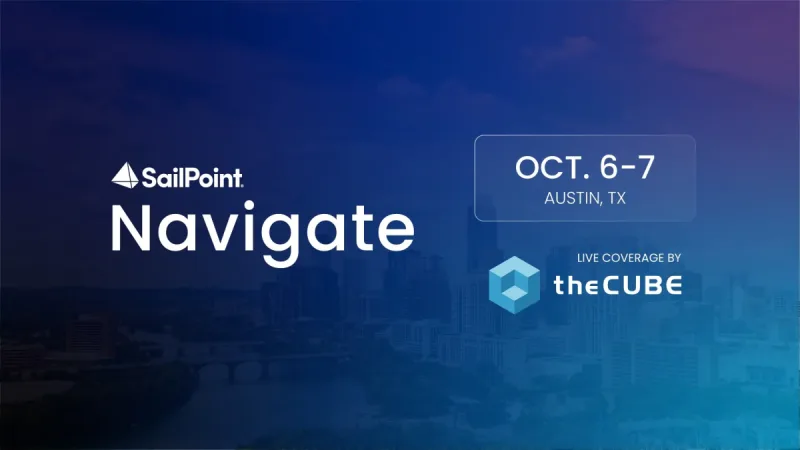
Identity governance faces new test as AI agents proliferate across enterprises
Autonomous AI agents are forcing organizations to rethink how they manage access and permissions at machine speed. SailPoint's Navigate conference will explore how identity security must evolve to handle this expanding population of non-human actors.
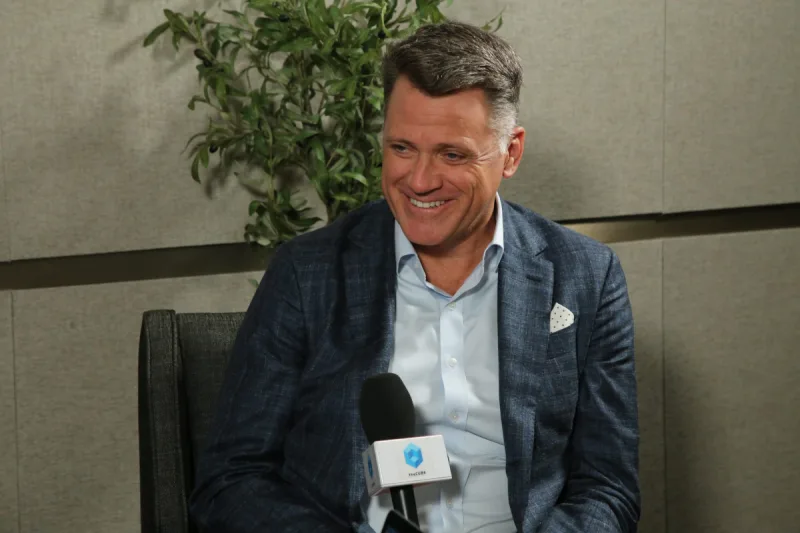
Vertical AI and Purpose-Built Hardware Drive Next Wave of Technology Growth
Specialized AI systems tailored to specific industries are emerging as the primary engine for the next phase of technology expansion, according to insights from the Bank of America Private Tech Trailblazers Conference 2026.
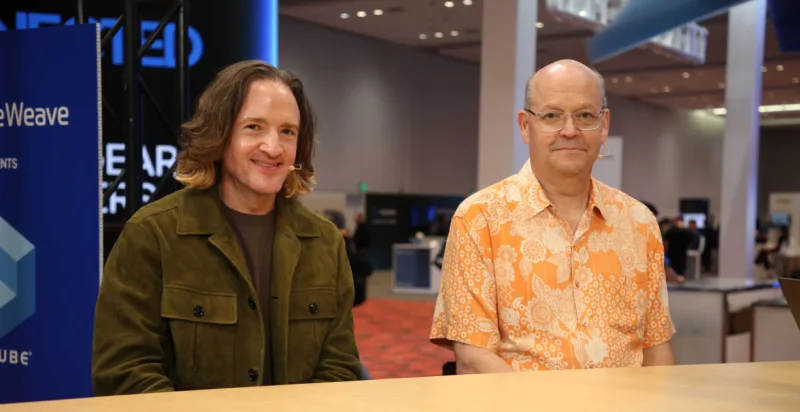
CrowdStrike and CoreWeave Partner to Automate AI Security at Machine Speed
As cyberattackers breach systems in seconds, CrowdStrike and CoreWeave are embedding automated defenses throughout AI infrastructure, turning attacks into training data for faster response.