CPU demand surges as agentic AI forces data centers to rethink power budgets
Chipmakers and server manufacturers are pivoting their strategies around central processors rather than graphics cards, as agentic workloads demand both raw speed and concurrent processing within strict power constraints.
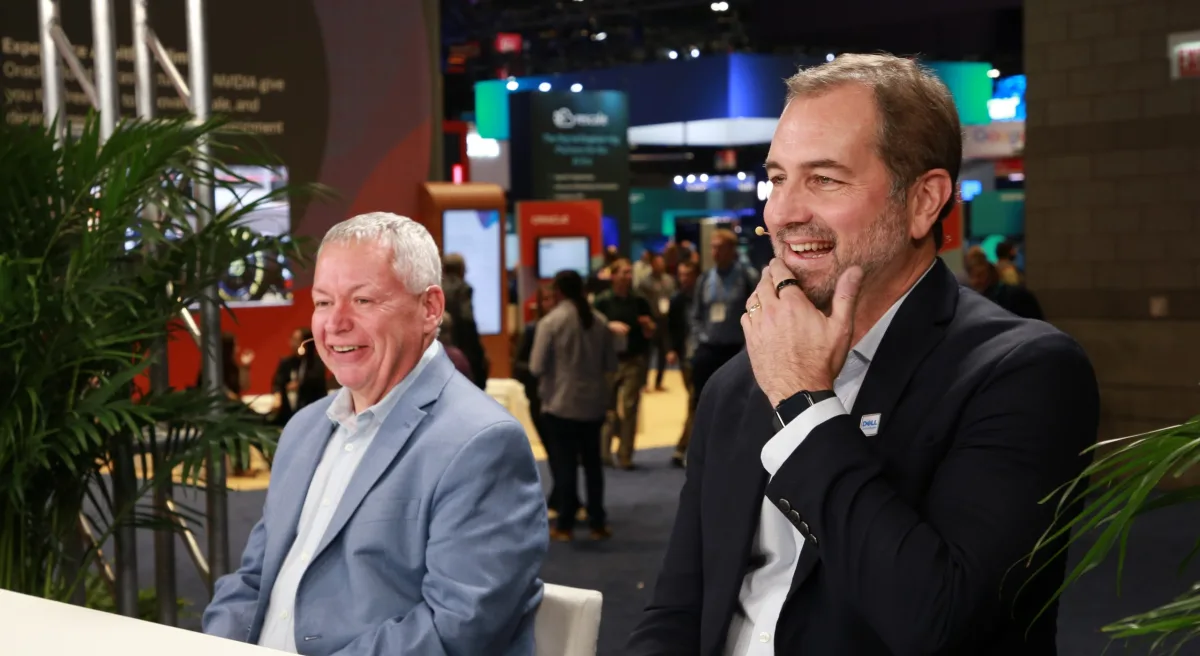
The emergence of agentic AI is fundamentally reshaping how chipmakers and server vendors approach product development. While graphics processing units continue to dominate industry conversation, the convergence of supercomputing and artificial intelligence is redirecting significant attention toward central processing units—particularly those engineered to operate within the power envelopes that data centers have already established.
This reorientation reflects lessons learned over several years. Many organizations discovered that adding multiple GPUs to a single CPU created a bottleneck: the accelerators sat underutilized because the processor couldn't feed them data fast enough. Scott Tease, vice president of business development for high-performance computing and sovereign AI at Advanced Micro Devices Inc., explained the implications. "People have realized how important that CPU is in a GPU architecture. But beyond that, agentic is not necessarily just a GPU thing," Tease said. "Agentic is going to be very CPU heavy because with agentic, what you're looking at, you want to go very fast, but you also want concurrency."
Tease and David Schmidt, vice president of PowerEdge product management at Dell Technologies Inc., discussed these dynamics during an exclusive broadcast at SC26, speaking with theCUBE Research's John Furrier and Gemma Allen.
Power limits reshape business development for compute
Dell and AMD have collaborated on rack-scale AI systems, but power consumption remains the critical limiting factor. When Dell began mapping out its product roadmap 2.5 years ago, enterprise customers indicated that rack power would plateau between 15 and 20 kilowatts, with many organizations exhausting their power allocations before fully populating a rack. In response, Dell engineered the PowerEdge R9825, a 3U server leveraging AMD's sixth-generation EPYC 9006 processors.
"It's been optimized for power efficiency and cooling efficiency," Schmidt said. "That means we're using less power to cool the system overall, and that's power that we can return to our customers."
The efficiency gains compound during equipment refreshes. A single EPYC 9006 server can eliminate 13 legacy machines from operation while simultaneously reducing cooling power consumption by 80 percent, according to Schmidt. Tease sees this reclaimed capacity as fuel for agentic applications, where autonomous agents could transform a single researcher's concept into thousands of parallel compute tasks.
https://www.youtube.com/embed/YzHMlc07c_E?feature=oembed
"Same number of researchers, massive increase in the amount of compute. So agentic is going to continue to drive more and more IT, and we've got to find a way to power it," Tease said.
Read more

Anthropic Researcher Claims Claude Proved the Riemann Hypothesis
Levent Alpöge, a researcher at Anthropic, announced he used Claude to prove one of mathematics' most significant unsolved problems, though the company has not officially confirmed the breakthrough.
Beyond Token Prices: Why Enterprise AI Cost Accounting Demands a Deeper Look
Companies pursuing multi-model AI strategies are discovering that token pricing alone masks the true cost of AI deployment. New data shows task efficiency and user consumption patterns drive the real bill.

Anthropic's IPO Surge Masks Broader AI Market Jitters as OpenAI Waits in the Wings
Anthropic's initial public offering delivered a solid 17% first-day gain, but the move may have signaled caution rather than momentum across the AI sector, with broader market concerns weighing on technology stocks.