CoreWeave Launches Specialized Engineering Service to Deploy AI in Industrial Workflows
The AI infrastructure provider is introducing a new service pairing its engineers with enterprise teams to integrate machine learning directly into manufacturing, aerospace, and automotive operations.
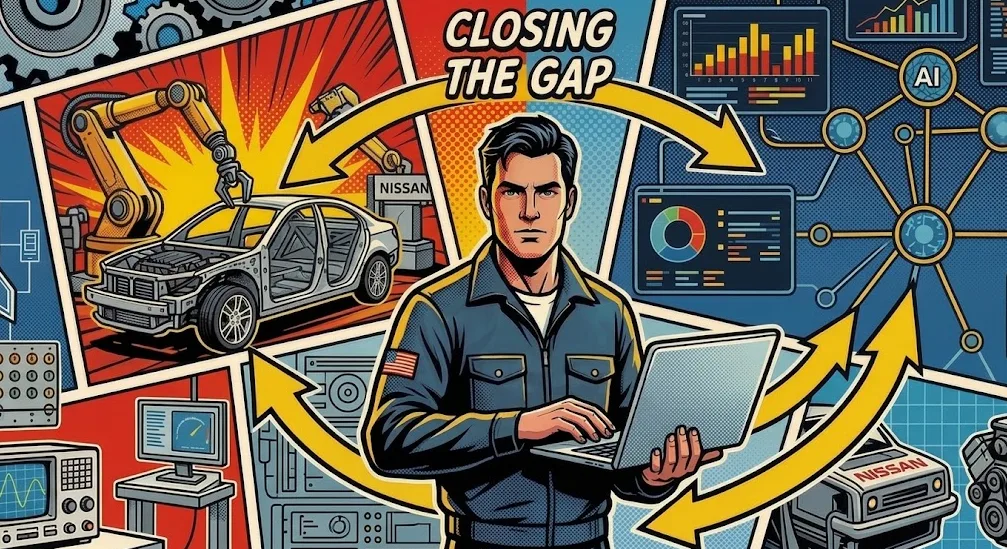
CoreWeave Inc., an infrastructure platform built for artificial intelligence workloads, has unveiled a new Physical AI Field Engineering service designed to embed AI capabilities into the operational workflows of large enterprises. The offering addresses a fundamental challenge: connecting the expertise of domain specialists with the technical knowledge required to deploy machine learning effectively.
The company has assembled a group of engineers with deep experience in automotive, aerospace, and mechanical engineering sectors. These specialists will partner directly with customer engineering teams to develop AI models trained on proprietary data, then embed those models into existing systems and processes to deliver measurable business value.
CoreWeave identifies a widespread organizational problem: many industrial companies maintain separate teams of domain experts and AI developers, but lack professionals who understand both the physics of complex systems and the capabilities of machine learning. Aerospace firms, for example, employ engineers versed in structural loads and combustion dynamics alongside software developers skilled in model creation. What remains scarce is talent capable of bridging these two disciplines—professionals who can ensure AI solutions account for the physical constraints and realities of the systems they're meant to optimize.
How the Service Works
Each engagement begins with a workshop where CoreWeave engineers assess the customer's current engineering processes, pinpoint high-impact use cases for AI, and establish expected financial returns before proceeding further.
The next phase involves constructing machine learning models using the customer's historical and live operational data to forecast physical system behavior. CoreWeave states this approach can reduce testing cycles by 17% to 35% by identifying which data points should guide subsequent model refinement.
Infrastructure setup follows, leveraging CoreWeave's core competency in cloud computing. The company configures the appropriate computational resources for the customer's AI workload, ensuring neither excess nor insufficient capacity. Once operational, the system enters an agentic learning phase where AI-generated insights translate into physical actions—enabling robotic systems to perform learned tasks, triggering predictive maintenance before equipment fails, and similar applications.
The final stage embeds the AI into the customer's operational environment through integrated applications, analytical dashboards, and optimization software, allowing immediate deployment of new capabilities.
The service runs on CoreWeave's proprietary infrastructure, which includes custom bare-metal servers and integrated development tools. The platform incorporates Weights & Biases' Weave evaluation system for AI assessment, marimo for data analysis, and ARIA for autonomous agent development.
Adoption and Real-World Results
They adopt it after it has held up in their own hands, on their own systems. That is why we send engineers who speak the same language as the teams across the table, and why we build on the customer's own data instead of handing back a report someone else needs to implement.
Richard Ahlfeld, Senior Vice President of Physical AI at CoreWeave
CoreWeave reports more than 100 early-stage partnerships across automotive, aerospace, and robotics sectors. Nissan Motor Co. was among the first customers, working with CoreWeave to develop predictive models from 90 years of archived testing data. The collaboration focused on chassis bolt-joint analysis, reducing the time required for physical testing by 17%. At another unnamed automotive manufacturer, CoreWeave's team completed an engine calibration procedure that typically requires three months in just 24 hours using the company's proprietary datasets.
The Physical AI Field Engineering service originated from CoreWeave's acquisition of Monolith AI Ltd. in September of last year. Monolith AI had established itself as a pioneer in applying artificial intelligence and machine learning to intricate physics and engineering challenges.
Read more
Identity governance faces new test as AI agents proliferate across enterprises
Autonomous AI agents are forcing organizations to rethink how they manage access and permissions at machine speed. SailPoint's Navigate conference will explore how identity security must evolve to handle this expanding population of non-human actors.
Vertical AI and Purpose-Built Hardware Drive Next Wave of Technology Growth
Specialized AI systems tailored to specific industries are emerging as the primary engine for the next phase of technology expansion, according to insights from the Bank of America Private Tech Trailblazers Conference 2026.
CrowdStrike and CoreWeave Partner to Automate AI Security at Machine Speed
As cyberattackers breach systems in seconds, CrowdStrike and CoreWeave are embedding automated defenses throughout AI infrastructure, turning attacks into training data for faster response.