Contact Centers Shift From Call Deflection to Actual Problem-Solving
Zoom and implementation partners are moving beyond containment metrics to measure whether AI agents truly resolve customer issues, not just avoid routing calls to humans.
Contact centers have long relied on containment as their primary success metric—the percentage of customer interactions handled without transferring to a human agent. But this approach has a fundamental flaw: a call can be contained while still leaving the customer without a real solution. Industry leaders are now pivoting toward what Zoom calls conversation to completion, a framework that measures whether an interaction actually solves the customer's problem rather than simply avoiding human involvement.
Ram Rajagopalan, head of product, AI for Zoom CX at Zoom Communications Inc., has spent the past year embedding this philosophy into the company's virtual agent platform. He argues that the industry's focus on containment rates alone has obscured what AI agents should truly be evaluated on. "Many customers, even about a year, 18 months ago, focused on purely measuring containment," Rajagopalan said. "Where I see conversations these days going is not just looking at containment, but end-to-end resolution. This is what we are calling within Zoom conversation to completion, where we are not just answering the basic inquiries, deflecting the call from going to a human agent, but actually completing the task that the consumers are calling in for."
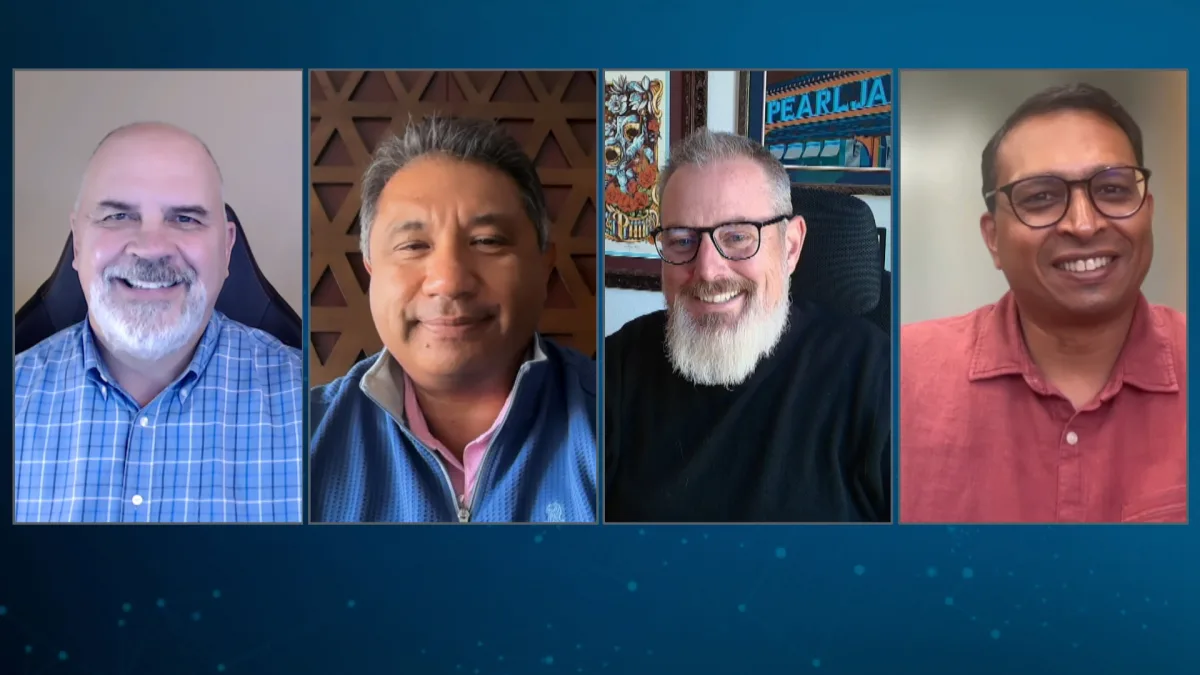
Rajagopalan and Joe Rittenhouse, co-chief executive officer of Converged Technology Professionals Inc., a Zoom implementation partner, discussed this shift during "The AI ROI in Contact Center Summit" in an exclusive broadcast on theCUBE, SiliconANGLE Media's livestreaming studio. Their conversation with theCUBE Research's Bob Laliberte and ZK Research's Zeus Kerravala explored how enterprises transition AI pilots from experimental phases into measurable production outcomes.
Choosing the right starting point over the most ambitious one
From the implementation perspective, Rittenhouse emphasized that achieving genuine resolution begins with selecting an appropriate initial use case rather than attempting the most complex scenario first. "Usually where we try to start is, where's the low-hanging fruit?" he said. "Just a simple question of what do you do after hours? We're usually staffed, we follow the sun from the East Coast to the West Coast, but then after hours we just have a general mailbox. And the answer is typically, I don't know."
Governance structures vary significantly across Rittenhouse's client base. Roughly half have established formal AI committees, while others are still determining whether AI strategy should flow from executive leadership or emerge through cross-departmental coordination. Zoom faces similar organizational questions as it scales its AI Companion across customers managing thousands of seats. "These tools work. You just can't boil the ocean," Rittenhouse said. "We use the analogy of eat the pizza piece by piece. You don't fold it in half and scarf it down. It's one bite at a time. Start small, and it'll grow."
https://www.youtube.com/embed/08tsCFH4t5c?feature=oembed
This incremental approach extends to transitions between virtual agents and human representatives. When a customer needs to speak with a person, the entire context of the conversation must transfer seamlessly. Rajagopalan stressed the importance of preserving this continuity: "You want to transfer the full context, the reason why they're calling, the collected variables that you need to pass on to a human being so that human being can get on with the job and get it done without having to repeat themselves or look at 10 different places of record just to answer a simple question."
Read more
Identity governance faces new test as AI agents proliferate across enterprises
Autonomous AI agents are forcing organizations to rethink how they manage access and permissions at machine speed. SailPoint's Navigate conference will explore how identity security must evolve to handle this expanding population of non-human actors.

Vertical AI and Purpose-Built Hardware Drive Next Wave of Technology Growth
Specialized AI systems tailored to specific industries are emerging as the primary engine for the next phase of technology expansion, according to insights from the Bank of America Private Tech Trailblazers Conference 2026.

CrowdStrike and CoreWeave Partner to Automate AI Security at Machine Speed
As cyberattackers breach systems in seconds, CrowdStrike and CoreWeave are embedding automated defenses throughout AI infrastructure, turning attacks into training data for faster response.