Cisco and Nvidia Chart New Course for AI Infrastructure Through Reference Architecture
A partnership between Cisco and Nvidia is reshaping how enterprises deploy AI data centers by creating unified reference models that simplify operations while maintaining performance and security at scale.
A new generation of artificial intelligence infrastructure is emerging through the use of reference architecture, which bridges innovations spanning from chip design through to the data center itself while delivering scalability, reliability and ease of operation. The technology sector is witnessing a transition away from designs centered on individual hardware components toward comprehensive systems that integrate storage networking, processing power and operational oversight. The partnership between Cisco Systems Inc. and Nvidia Corp. demonstrates how reference models can speed up enterprise adoption of AI without requiring organizations to overhaul existing infrastructure. This method allows companies to build upon their current proven systems while addressing emerging requirements for speed and compatibility, as explained by Will Eatherton, senior vice president of data center, internet and cloud infrastructure engineering at Cisco Systems Inc.
I'll just hit the three key things we're announcing this week. The first one is cloud reference architecture, which is based on currently shipping technology. The second announcement is a new Nexus 9100 … and the third one is the orderability and soon-to-be GA of hyper-fabric AI.
Will Eatherton, Cisco Systems Inc.
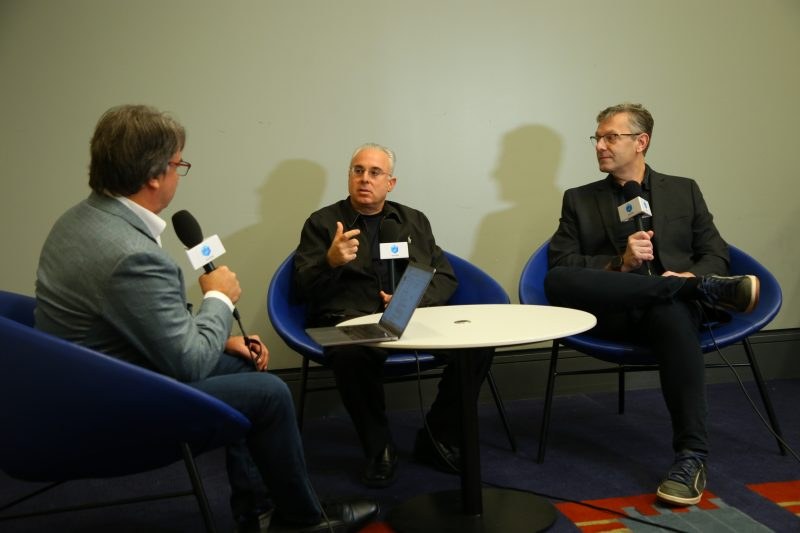
Eatherton and Gilad Shainer, SVP of marketing at Nvidia Corp., discussed their collaboration during an exclusive interview at the Nvidia GTC Washington, D.C. event, broadcast through theCUBE, SiliconANGLE Media's livestreaming platform. The two executives explored how their companies' joint work on reference architecture is reshaping the way AI data centers are designed by consolidating networking, processing and operational management into a single framework.
Reference Architecture Becomes Central to Enterprise AI Strategy
Nvidia's vision involves converting data centers into AI supercomputers capable of keeping pace with the evolution of modern computational tasks. This transformation demands a common architectural framework connecting processing and networking capabilities — something that can be standardized, tested and relied upon. Cisco's partnership fulfills this requirement by extending Nvidia's AI capabilities into the business environment using established operational systems, according to Shainer.
Inside Nvidia, we're essentially focusing on building AI data centers. We want that AI technology to be accessible by everyone. Therefore, working with the ecosystem is an important thing for Nvidia to make sure that AI is accessible for everyone.
Gilad Shainer, Nvidia Corp.
The objective centers on making AI infrastructure simpler to implement while reducing the operational overhead typically associated with supercomputer deployments. Through the combination of Nvidia's Spectrum-X Ethernet technology and Cisco's Nexus software, organizations gain access to the same management interfaces and platforms they currently depend on — now enhanced for AI workloads, Shainer noted.
The collaboration with Cisco actually helps us to drive the AI technology that we develop into the enterprise class. They would like to continue using the same things because this is how their IT infrastructure is built. Our collaboration enables us to bring those AI supercomputers into the enterprise.
Gilad Shainer, Nvidia Corp.
This continuity proves essential as enterprises contemplate substantial commitments to AI infrastructure investments. Cisco's reference architecture framework allows organizations to roll out thousands of GPUs while preserving unified oversight, data protection and consistent performance across the deployment, according to Eatherton.
https://www.youtube.com/embed/VdtdEe0xg58?feature=oembed
For us, being able to bring in Nexus, Nexus Dashboard, the new hyper-fabric AI — these are ways that our customers with small teams and expertise that they already have can add that. They shouldn't have to be experts on RoCE and RDMA and all those aspects of troubleshooting. That's something that the tooling and management software should do that for them. They can trust us to put that together and validate.
Will Eatherton, Cisco Systems Inc.
Read more
Identity governance faces new test as AI agents proliferate across enterprises
Autonomous AI agents are forcing organizations to rethink how they manage access and permissions at machine speed. SailPoint's Navigate conference will explore how identity security must evolve to handle this expanding population of non-human actors.

Vertical AI and Purpose-Built Hardware Drive Next Wave of Technology Growth
Specialized AI systems tailored to specific industries are emerging as the primary engine for the next phase of technology expansion, according to insights from the Bank of America Private Tech Trailblazers Conference 2026.
CrowdStrike and CoreWeave Partner to Automate AI Security at Machine Speed
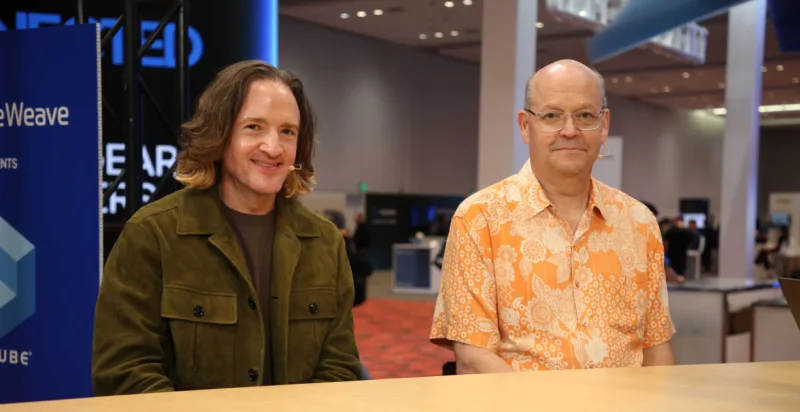
As cyberattackers breach systems in seconds, CrowdStrike and CoreWeave are embedding automated defenses throughout AI infrastructure, turning attacks into training data for faster response.