Beijing Rejects U.S. Push to Slow AI Development as Trump-Xi Summit Looms
China's government dismissed calls from American AI executives to deliberately pace frontier research, casting the proposal as a competitive maneuver in the escalating technology standoff between the two superpowers.
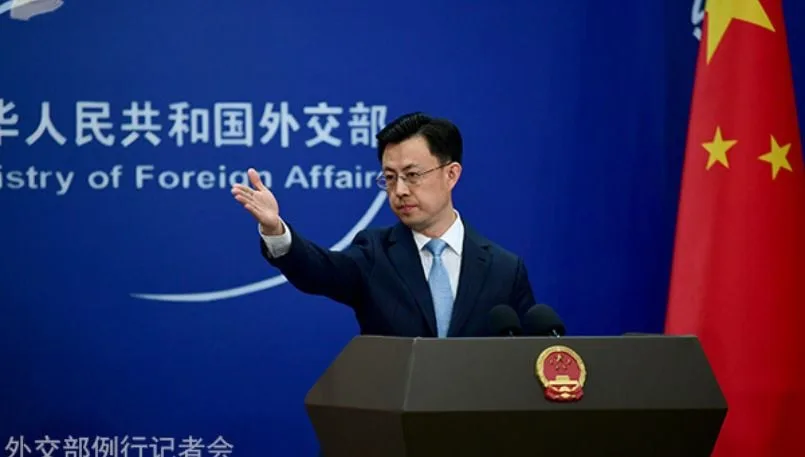
Beijing is pushing back against proposals from leading American artificial intelligence figures to deliberately decelerate cutting-edge research, characterizing the initiative as part of the intensifying technological competition between the United States and China.
The dispute erupted when Anthropic CEO Dario Amodei released an essay over the weekend advocating for AI companies to intentionally reduce their development pace, cautioning that "a Chinese lead in AI would pose grave danger for the United States and the world." Both Sam Altman of OpenAI and Elon Musk publicly endorsed the concept.
China's response came swiftly. Foreign Ministry spokesperson Guo Jiakun stated to reporters on Monday, according to Bloomberg, that "fearmongering, confrontation and vicious competition" would undermine efforts toward "global AI governance" and would benefit no one. The state-controlled Global Times characterized the proposal as a "Cold War script" applied to artificial intelligence.
Why it matters
This disagreement transcends a simple exchange between corporate leaders and government officials. It reveals a fundamental challenge in U.S.-China AI cooperation: both nations find it advantageous to discuss safety considerations, yet neither is prepared to accept constraints that might grant the other side a competitive edge.
As President Trump and Chinese leader Xi Jinping prepare for a meeting in Washington scheduled for September 24, artificial intelligence may emerge as a negotiating point alongside broader discussions about technology access, export restrictions, and economic rivalry.
What Amodei actually proposed
Amodei's essay went beyond general recommendations for restraint—it identified specific targets. He labeled China as "the autocratic country with by far the most advanced AI capabilities" and advocated for limiting semiconductor exports to Beijing while preserving possibilities for eventual cooperation.
Trump adopted a more assertive stance, remarking to journalists on Sunday, "We're leading China in AI. We're the most sophisticated country in the world, and frankly I want to keep it that way because whoever wins AI wins."
China's state security minister, Chen Yixin, presented an alternative perspective, noting that AI "has become the main battleground in global technological competition and a new arena for strategic rivalry among major powers."
The deeper problem
Beneath the surface of official statements lies a shared strategic predicament: moving forward alone with restraint carries risks if the opposing side continues accelerating. This creates a classic deadlock, leading experts to remain skeptical about the likelihood of any binding accord in the near term.
Ja Ian Chong, a political science professor at the National University of Singapore, told NBC News: "There's the sort of talk of cooperation, but the behavior suggests otherwise, and underlying that behavior, I think, is this deep mutual suspicion."
What distinguishes this confrontation from earlier technology disputes between Washington and Beijing is the current moment. Chinese AI systems are now approaching parity with American counterparts—Georgetown researcher Helen Toner estimated the gap at "something like six to nine months," per CNBC—meaning neither capital has much incentive to make concessions first.
What it means going forward
For enterprises and end users, the tangible consequences will manifest through semiconductor export policies. Organizations leveraging American or Chinese AI systems should anticipate stricter controls on computing hardware and software distribution rather than any deceleration in underlying technological advancement; the competition appears poised to intensify rather than slow.
Some observers maintain a more optimistic outlook: Theo Bertram of the London-based Social Market Foundation suggested that each nation could implement its own domestic safety measures independent of a bilateral agreement. However, absent shared understanding between Washington and Beijing about what constitutes "safety," the trajectory will likely remain driven by competitive pressures rather than collaborative caution.
In related developments, Microsoft has formulated a "Humanist AI" code establishing that emerging models should remain subject to human oversight, permit interruption and deactivation, and adhere to mandatory safety requirements.
Read more

Identity governance faces new test as AI agents proliferate across enterprises
Autonomous AI agents are forcing organizations to rethink how they manage access and permissions at machine speed. SailPoint's Navigate conference will explore how identity security must evolve to handle this expanding population of non-human actors.

Vertical AI and Purpose-Built Hardware Drive Next Wave of Technology Growth
Specialized AI systems tailored to specific industries are emerging as the primary engine for the next phase of technology expansion, according to insights from the Bank of America Private Tech Trailblazers Conference 2026.
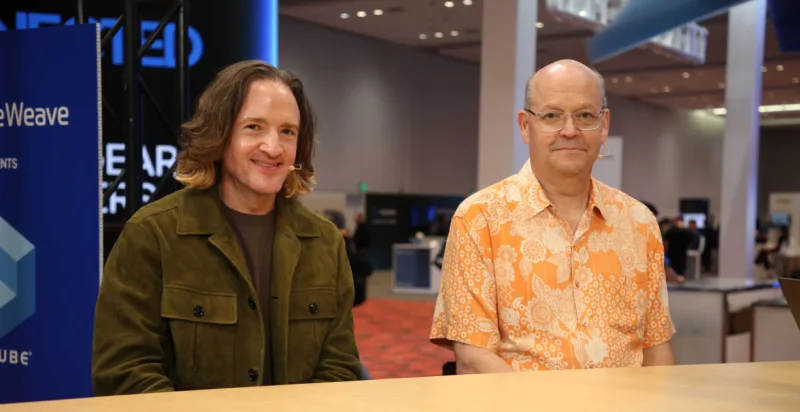
CrowdStrike and CoreWeave Partner to Automate AI Security at Machine Speed
As cyberattackers breach systems in seconds, CrowdStrike and CoreWeave are embedding automated defenses throughout AI infrastructure, turning attacks into training data for faster response.