AWS Launches Four-Product Amazon Connect Suite to Bring AI Agents Into Enterprise Workflows
Amazon Web Services is pushing artificial intelligence deeper into business operations through a restructured Amazon Connect portfolio that transforms the legacy contact center platform into four specialized services designed to automate industry-specific tasks.
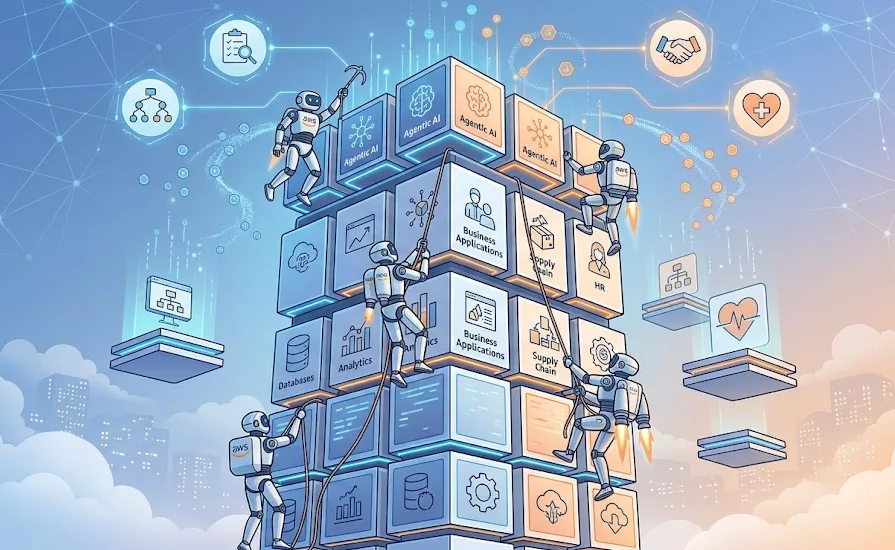
Amazon Web Services Inc. is advancing agentic artificial intelligence through the enterprise software stack by unveiling an expanded Amazon Connect portfolio today. The new lineup comprises four distinct offerings engineered to handle complex, sector-focused workflows and automate business processes at scale.
The original Amazon Connect cloud contact center service has been rebranded as Amazon Connect Customer AI. Accompanying this change are three newly launched services: Amazon Connect Decisions, Amazon Connect Talent and Amazon Connect Health.
AWS introduced Amazon Connect in 2017, drawing from technology infrastructure that Amazon.com Inc. had developed internally to support its own customer service operations. At launch, the platform offered enterprises a departure from traditional contact center solutions by providing a flexible, pay-as-you-go model capable of handling thousands of customer service representatives.
Initially, Amazon Connect functioned primarily as a telephony and call routing system built to process hundreds of thousands of daily calls and allocate them among available staff. The platform has since evolved into a comprehensive customer engagement solution incorporating natural language processing and sentiment analysis capabilities to streamline contact center functions and extract deeper customer intelligence.
Expanding agentic automation
The redesigned Amazon Connect portfolio centers on a design principle AWS calls "humorphism," which describes autonomous AI agents that function similarly to human workers—absorbing context, managing priorities and independently requesting necessary information to complete tasks. "We want computers to adapt to people, not the other way around," stated Hector Ouilhet Olmos, vice president of design for AWS Solutions.
Amazon Connect Customer represents the refreshed version of the original Connect platform. The service introduces upgraded setup capabilities that permit organizations to implement AI-driven identity verification and payment processing systems in a matter of weeks, even without deep technical expertise in these domains.
Amazon Connect Decisions stands out as perhaps the most ambitious new offering, leveraging Amazon's proprietary operational science and supply chain optimization methodologies. The service enables enterprises to transition from spreadsheet-dependent logistics management toward an "agentic approach."
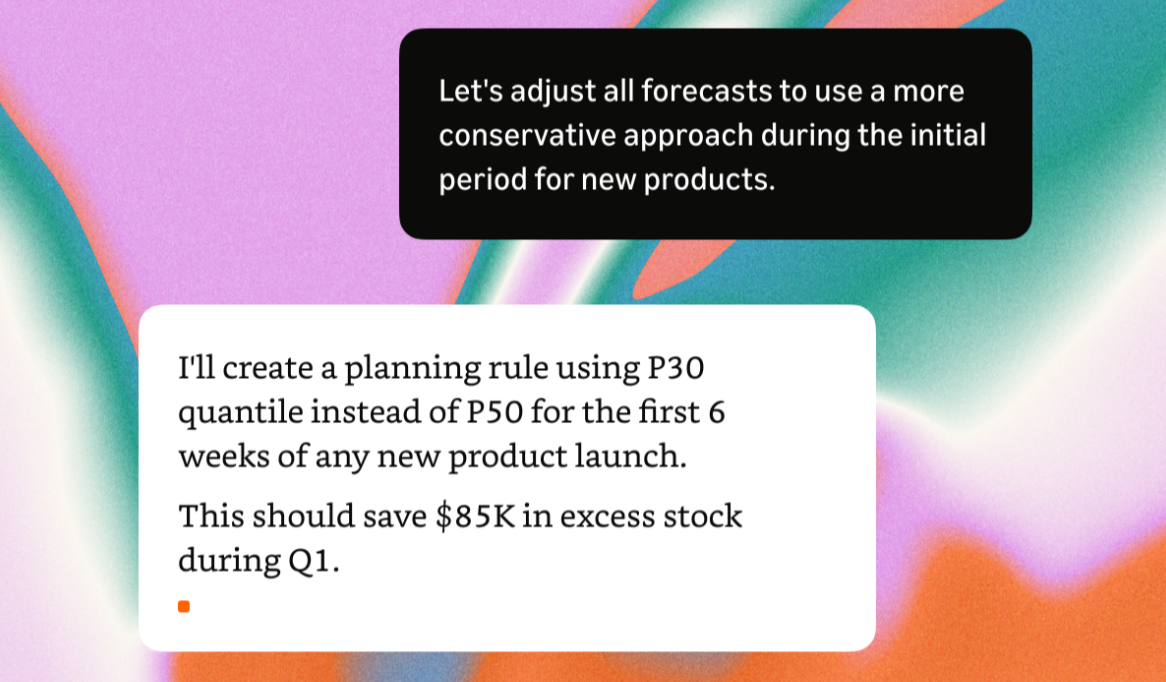
Rather than simply alerting users to supplier complications, the system identifies the underlying issue, categorizes exceptions and proposes remedies accompanied by projected financial impact and confidence ratings for each option. The service operates through a network of localized ensemble forecast models, incorporating Amazon's Chronos2 AI model, which focuses on time-series forecasting to manage both consistent demand patterns and sudden product surges, according to AWS.
Amazon Connect Talent builds upon Amazon's track record of recruiting approximately 250,000 seasonal employees during peak business periods. The service automates high-volume hiring workflows by deploying AI agents to examine job specifications, construct interview frameworks and execute complete interviews using AI-driven interviewers. Human recruitment staff gain access to candidate performance data and competency assessments, accelerating hiring determinations.
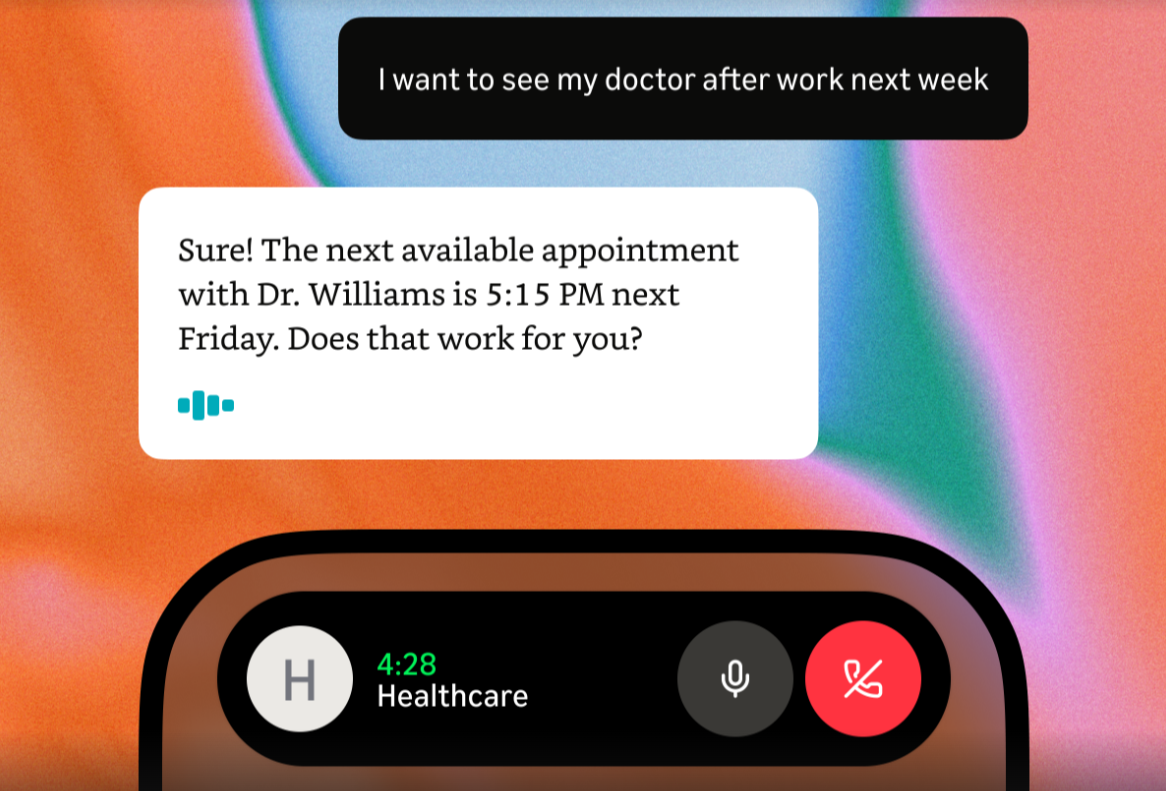
Amazon Connect Health, a service unveiled earlier this year, tackles administrative inefficiencies within healthcare organizations. The offering provides access to purpose-built AI agents handling patient eligibility checks, scheduling coordination and medical documentation, generating clinical notes instantaneously from physician-patient interactions.
Moving up the software stack
The Amazon Connect portfolio expansion signals that AWS is executing a strategic shift that industry observers have anticipated for years—transitioning from foundational infrastructure into application-layer software. Historically, AWS concentrated on delivering underlying technical components including storage, processing capacity and data management systems that support applications. The company is now developing end-user applications directly.
Colleen Aubrey, AWS' senior vice president of applied AI solutions, elaborated on this direction in conversation with SiliconANGLE, noting that organizations increasingly seek "industry-specific agentic systems" instead of multipurpose chatbots. "We've been in the jack-of-all-trades AI era for a little while," Aubrey explained. "But it's not [like] having an expert that you can work with that brings deep understanding of an area… and that gets better every day."
Researchers Dave Vellante and George Gilbert at theCUBE Research have labeled this strategy "worker-bee AGI," distinguishing it from the "messiah AGI" approach championed by organizations including Anthropic PBC and OpenAI Group PBC. "The differentiation will not come from shiny agent UIs or narrow features," they wrote in December following AWS' re:Invent 2025 event. "It will come from the depth of integration with data systems, workflow systems and the governance and control planes that bind agents to enterprise policy and process."
While today's announcement may appear incremental, it highlights the substantial competitive advantage that AWS and comparable cloud infrastructure providers possess in developing next-generation enterprise AI capabilities.
Enterprises may find appeal in what appears to be an innovative approach to AI deployment grounded in a model that originated in call center environments, where systems monitor and empower workers to increase productivity, according to Holger Mueller of Constellation Research. Mueller noted that the refreshed Connect operates similarly to contact center AI by tracking agent availability and monitoring task progress.
"The supply chain use case is no surprise, because Amazon has plenty of in-house expertise in automation in this area, but the talent acquisition scenario is a much bolder move, building on the company's experience in hiring," Mueller stated. "It's enabling agents to conduct interviews at a convenient time for prospects, and if that works as flawlessly as Amazon hopes, it can transform talent acquisition entirely. I'd imagine it's Connect Talent that scares incumbent software vendors the most, but it's clear that Amazon and AWS are working up the stack in all areas."
Read more
Identity governance faces new test as AI agents proliferate across enterprises
Autonomous AI agents are forcing organizations to rethink how they manage access and permissions at machine speed. SailPoint's Navigate conference will explore how identity security must evolve to handle this expanding population of non-human actors.

Vertical AI and Purpose-Built Hardware Drive Next Wave of Technology Growth
Specialized AI systems tailored to specific industries are emerging as the primary engine for the next phase of technology expansion, according to insights from the Bank of America Private Tech Trailblazers Conference 2026.

CrowdStrike and CoreWeave Partner to Automate AI Security at Machine Speed
As cyberattackers breach systems in seconds, CrowdStrike and CoreWeave are embedding automated defenses throughout AI infrastructure, turning attacks into training data for faster response.